Who is Yasmine Khalil?
Yasmine Khalil doesn’t waste time chasing trends. Born in Beirut and raised between Berlin and Montreal, she carries the weight and color of multiple cultures and it shows in her work. Now based in Marseille, Khalil’s practice is a blend of material research, symbolism, and personal reclamation. She uses her art to question what identity even means when borders, gender, and memory all blur.
Her work leans hard into layers: fabric, pigment, text fragments, and sculptural forms that nod to everything from Levantine folklore to modern feminist theory. It’s not subtle but it’s not clumsy either. She knows exactly what she’s doing: reclaiming space, telling stories that aren’t often told, and complicating easy narratives.
Over the last five years, Khalil’s pieces have been featured in group shows across Europe, as well as solo appearances in the São Paulo and Istanbul Biennales. Curators cite her as one of the few artists today capable of weaving personal history with geopolitical nuance without sounding like a thesis paper.
If you’re looking for clean lines and simple answers, Khalil’s work won’t give them to you. But if you want depth, contradiction, and a voice that won’t fold under pressure, she’s already three steps ahead.
Art as a Mirror: Yasmine’s Perspective on Identity
Yasmine Khalil doesn’t traffic in neat answers. For her, identity isn’t a fixed concept it’s a moving target. Fluid, layered, unresolved. Her work rejects the idea of singular narratives and instead leans into contradiction. That ambiguity? It’s deliberate. She’s not interested in telling people who she is she’s asking what it means to become.
Born in Lebanon and raised across multiple continents, Khalil brings migration into the frame often literally. Borders, displacement, and cultural dualities shape her storytelling. Her heritage isn’t framed as a past but as a pressure system something that exerts force on the present in ways both visible and invisible. That complexity shows up in symbol stacked canvases, fragmented self portraits, and installation works where language breaks apart mid sentence.
Her 2022 series, “Threaded Echoes,” explored her grandmother’s migration story through layered fabrics and stitched excerpts from family letters. Another piece, “He/She Speaks in Sand,” shattered traditional gender binaries by mixing Arabic calligraphy with androgenous silhouettes fading into desert landscapes. Her latest mural, painted on the side of a derelict Berlin train station, blends video projection with street art to explore memory as both archive and ghost.
Yasmine isn’t trying to make you comfortable. She’s trying to get you to recognize yourself in the blur.
The Process Behind the Canvas
Yasmine Khalil doesn’t treat materials like passive tools. Every object she places, every texture she chooses, carries weight culturally, politically, emotionally. She often combines raw textiles, soil, archival photographs, and handwritten fragments to build surfaces that feel like skin or sediment. Nothing is random. Even her use of threads sometimes frayed, sometimes tightly wound speaks to themes of rupture and repair. The materials matter because they hold stories of their own.
But intention only gets her halfway. Khalil’s process dances between planning and surrender. She might sketch a structure and abandon it halfway through. Or let a mistake redirect the entire tone of a piece. There’s friction between control and openness, and she doesn’t try to resolve it. That tension shows up in the finished works too edges that refuse to tidy themselves, patterns that break mid sequence. It’s all part of what she calls “truth, not performance.”
Language plays a role, but so does absence. Text appears sparingly, often incomplete. Arabic poems might blur into washes of ink or sit next to blank shapes on paper. And the silence those untouched spaces are deliberate. “Not everything needs to speak,” she says. Sometimes, what she doesn’t say is what lands hardest with the viewer.
What 2026 Looks Like for Contemporary Artists
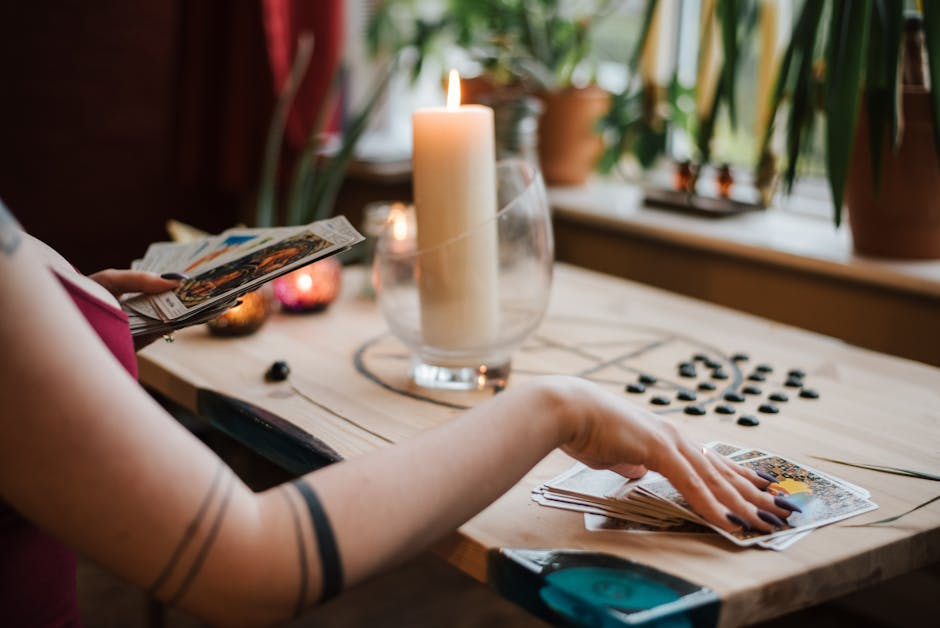
As the art world continues to evolve with technology and globalization, artists like Yasmine Khalil are redefining how authenticity, cultural responsibility, and innovation intersect.
Navigating a Digital First, Globalized Market
The landscape for contemporary artists is increasingly shaped by digital platforms and international exposure. This increased accessibility offers both opportunities and challenges:
More eyes, more pressure: Online audiences can amplify reach but also demand faster output and sharper positioning.
Global reach, local disconnect: Emerging artists sometimes struggle to maintain cultural specificity in a homogenized art market.
New platforms, new gatekeepers: Algorithms and platform curators now influence visibility as much as galleries or curators once did.
Yasmine reflects on this shift with cautious optimism. For her, it’s about staying connected to the intent behind the work, not just chasing visibility:
“Digital access is powerful, but it can dilute your voice if you’re not intentional. You have to ask yourself who are you making this for, and why?”
Cultural Ownership and Representation: Ongoing Conversations
Art has always been a space for discourse and today, questions of representation are more urgent than ever:
Whose story is being told and by whom?
How do we balance personal experiences with shared cultural symbols?
What does responsible storytelling look like across cultures?
Yasmine doesn’t offer blanket answers. Instead, she approaches these questions through her own lens drawing from personal history while acknowledging the weight of collective experience. Her goal: to honor her heritage without simplifying it.
“Representation isn’t about speaking for everyone it’s about being honest about what you know and where you come from.”
Innovation That Stays Grounded
Many artists are feeling the pull to experiment with new mediums, from AI generated images to immersive installations. While Yasmine remains open to these shifts, she emphasizes that innovation should never feel performative:
Mediums evolve but meaning must remain integral.
Creative risks are essential but not if they sacrifice artistic clarity.
Grounding practices, like reading, personal rituals, or periods of reflection, sustain her creative momentum.
“Growth in art isn’t always about expansion. Sometimes, it’s about returning to a single idea and going deeper.”
As 2026 approaches, Yasmine continues to be a voice of intentionality reminding artists and audiences alike that progress doesn’t have to mean speed or spectacle.
Advice for Emerging Artists
Vulnerability isn’t weakness it’s the sharpest tool in the kit for any artist trying to say something real. Yasmine Khalil doesn’t mask her process. She lets the cracks show. In her view, baring discomfort or uncertainty through art doesn’t alienate it connects. People don’t want perfect. They want truth dressed in pigment, line, or silence. That kind of honesty cuts through noise.
Mentorship plays its part too. Yasmine emphasizes how learning across generations and geographies expands more than skill it reframes how artists see the world and themselves within it. A conversation with someone ten years ahead of you, or from a completely different tradition, can reset your entire arc. It’s less about technique, more about mental and emotional frameworks.
And then there’s resilience. Trends come and go fast. What stays is your ability to keep making, even when no one’s watching. Yasmine talks about rejection like a rite of passage, not an existential threat. For her, resilience isn’t about thick skin. It’s about deep roots. Art isn’t a sprint. It’s showing up again and again with a voice that evolves but doesn’t vanish.
So for any emerging artist: lean into your own story. Ask questions. Find people who challenge your comfort zone. And keep building, even when it feels like you’re starting from zero. That’s where the real work and growth begins.
Further Reading and Resonance
Yasmine’s reflections on identity, memory, and cultural roots don’t exist in a vacuum. Artists across the globe are wrestling with similar themes each through their own lens, each with their own voice. If you’re looking to expand your perspective, explore how others interpret the weight of history, place, and self through creative work.
For a curated look at how top contemporary artists are tackling meaning, narrative, and personal truth, check out 10 Thought Provoking Quotes From Leading Contemporary Artists. It’s a quick but rich read, especially if you’re in the middle of finding your own language as a creative.
Final Takeaways from the Conversation
For Yasmine Khalil, art isn’t a performance or a product. It’s a way of asking yourself who you are and asking again tomorrow. Her work doesn’t settle on answers. It sits with the contradictions. In her words, creativity isn’t about final form; it’s about staying open, staying uncertain.
She speaks often about slowness not in terms of pace, but of presence. That to really create, you have to draw inward. Not everything has to scale. Not everything needs to be shared instantly. In a world obsessed with momentum, Yasmine’s practice is a quiet refusal. A steady return to self, again and again.
Her final thought in the interview captures the ethos perfectly: creativity isn’t a destination. It’s a return. A loop. A practice. You don’t arrive. You return to memory, to body, to questions that never had clean answers to begin with.