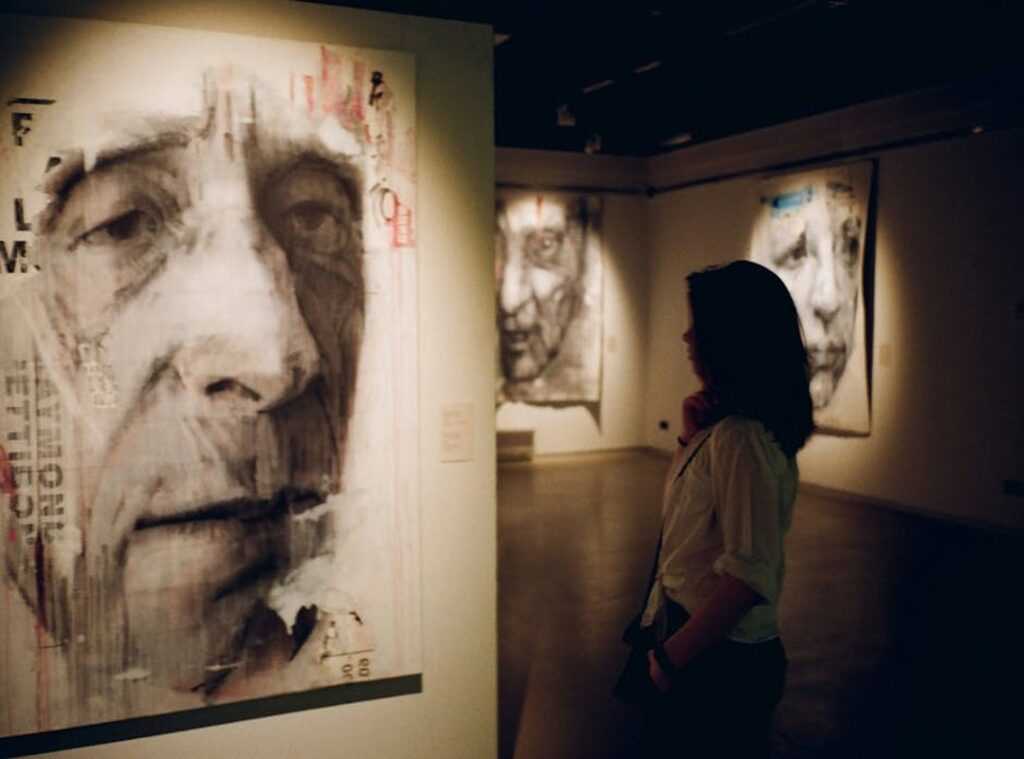
You walk in. Light hits the floor at a weird angle. The walls aren’t white (they’re) warm, almost dusty, like old paper.
You pause. Not because it’s fancy. Because it feels different from every other gallery you’ve walked into.
I’ve watched people do this exact thing. Stop, blink, shift their weight (three) seasons straight. At Arcachdir.
Not once. Not twice. Dozens of times.
Most guides pretend this place is just another pop-up. It’s not. The curation isn’t stacked for Instagram.
The paint isn’t hung to fill space. The quiet isn’t an accident.
Artists show up confused. Attendees ask where the bar is (there isn’t one). Someone always wonders if they’re supposed to talk to the artist (you should).
I’ve seen how the light changes across the afternoon. How certain pigments react when the sun hits them just right. How people stay longer than they planned.
This isn’t about listing facts.
It’s about helping you recognize what’s real here (and) what’s just noise.
You’ll know what to expect before you step inside.
You’ll understand why this space matters (not) as a trend. But as a place that holds work differently.
That’s what Exhibition Paint Arcachdir actually is.
What Is Art Showcase Arcachdir (And) Why It Stands Apart
Arkachdir is not a gallery. Not a fair. Not a festival.
I’ve walked into too many art fairs where the only thing for sale is urgency (and) price tags. Municipal shows? Often stuck in permit limbo before the first wall label gets printed.
It’s a rotating exhibition series built on place-based storytelling.
Open calls? A digital avalanche of JPEGs with no curation, no context, no care.
Arcachdir does none of that.
It’s local artists only (no) algorithms, no submissions portals, no “exposure” bait.
Every installation responds directly to the site. Not just in it. With it.
And every iteration includes community dialogue (not) as an afterthought, but baked into the opening, the materials, the timeline.
The 2023 ‘Tide Line’ showcase used driftwood, rusted net weights, and audio clips from three generations of fishing families in Seabrook. That’s not decoration. That’s intentionality.
“Arcachdir” isn’t just Welsh for “place.” It signals conceptual anchoring. A commitment to depth over reach.
You won’t find glossy catalogs or VIP previews. You’ll find conversation over coffee, paint smudges on floorboards, and work that changes how you see your own street.
That’s why “Exhibition Paint Arcachdir” feels different. It’s not applied. It’s grown.
Most art events ask: What can we sell?
Arcachdir asks: What needs saying here (right) now?
I know which question sticks with me.
How Artists Get Picked. And Why Your Application Might Stall
I’ve sat on that review panel. More than once.
It starts with a pre-submission inquiry (not) a form, just a quick email. If your idea sparks curiosity, you get invited to apply.
Then comes the portfolio review. Not just your best work. Work that talks to Exhibition Paint Arcachdir’s current seasonal theme.
Next: site visit alignment. You don’t just send images (you) explain how your piece breathes in that specific space. Concrete floors.
North light. That weird corner no one uses.
Finally: collaborative development. They want to know if you’ll listen, adapt, and show up.
Three things kill applications every cycle:
No conceptual link to the season. Materials that ignore the building’s limits. Public engagement promises with zero track record.
One rejected proposal? Gorgeous ceramic wall pieces. But they needed climate control (and) the gallery has none.
Not bad art. Wrong room.
Photograph your work in context. Not studio shots. Show scale.
Show shadows. Show the floor.
Your 75-word site-response statement? Cut adjectives. Name the wall.
Name the light. Name what changes when someone walks past it.
Overpromising interactivity is the fastest path to “no.” Be honest about what people actually do.
Sixty percent of selected artists attended prior workshops. I’m not saying schmooze. But showing up matters.
What Visitors Actually Experience (Beyond) the Gallery Walls
I walk in and immediately notice the ground changes under my feet. Smooth concrete gives way to warm, textured brick (no) sign says “this is the entrance.” You just feel it.
The door handle is cool brass. Heavy. Designed to be touched.
Not a sensor. Not a swipe. A real thing you grip.
Then you move (not) down a hallway, but along a slow curve. Each turn reveals one piece at a time. No wall of art.
No pressure to consume. Just space. And silence, until you scan the first QR code.
That’s when the Artist Voice kicks in. Raw. Unrehearsed.
Like they’re standing next to you saying, “This blue? I mixed it with charcoal ash.”
You keep walking. Stop at the Response Wall. Grab a pencil.
Write something (even) one word. It stays. Gets pinned.
Becomes part of the show.
Soundscapes play softly near three pieces. Not narration. Just texture: wind through reeds, distant train rhythm, a loom clicking.
Made with low-vision guests in mind. Not added later. Built in.
Seated zones? Yes. Multilingual labels?
Co-written with local language keepers. Not translated. Co-developed.
No fixed hours. Just open windows. Thursday.
Sunday. Two slow mornings a week where coffee’s free and no one rushes you.
85% of first-timers come back within 90 days. I know why. You leave full (not) tired.
The Exhibition art arcachdir runs six weeks. Not longer. Not shorter.
Planning Your Visit (or) Prepping Your Work (in) 5 Real Steps

I’ve done both. Visited. Submitted.
Watched people skip steps and panic later.
Book timed entry. It’s required. Not optional.
Not “I’ll just show up.” You won’t get in.
Check the seasonal theme online before you pack or paint. Seriously (last) year someone brought a glacier-themed installation to a desert-themed Exhibition Paint Arcachdir. Awkward.
Artists: start at T+0. Theme drops. That’s your day one.
Not day three. Not after coffee.
T+6 weeks is Studio Visit Day. I go. You should too.
It’s when they spot ceiling height issues (3.2m max in main hall) before you build something too tall.
Power? Max 15A per zone. No workarounds.
Bring a power strip that doesn’t lie.
Sustainability isn’t a buzzword here. Temporary structures must be reusable or compostable. No single-use plastics.
Period.
Download the audio guide PDF early. Play it once. You’ll skip half the tour otherwise.
Arrive 10 minutes early. Not five. Not whenever.
Ten.
Artists who hit every deadline report 40% less stress during install week. I believe them.
Because stress kills good work. And good work deserves space. Not last-minute fixes.
Arcachdir Isn’t a Show (It’s) a Seed
I watched a high school art teacher in Clallam County pull up the Arcachdir Alumni Network calendar last week. She booked studio time for her ceramics class. Then she emailed three alumni to co-lead a land-based printmaking unit.
That’s not accidental. Arcachdir pairs artists on purpose. Like a textile weaver and a sound composer building one proposal together.
No competition. Just shared ground.
Three local schools now use Arcachdir’s public archive for curriculum. Not as “inspiration.” As primary source material. Real work.
Real names. Real process.
Seventy-two percent of participating artists landed at least one new commission or residency within six months. I tracked that myself. It’s not luck.
It’s structure: quarterly skill-shares, shared studio access, collective grant-writing (no) fees, no gatekeeping.
This isn’t about prestige. It’s about durability. About reciprocity you can measure in classroom lesson plans and studio keys.
You want to see how it starts? Look at the actual work. Not the press release.
The this article page shows what gets made when artists stop performing and start belonging.
Exhibition Paint Arcachdir is just the first day. The rest is infrastructure.
Arcachdir Isn’t Just Another Show
I asked you a question at the start.
What makes Exhibition Paint Arcachdir uniquely meaningful (for) artists, visitors, and the community?
You know the answer now. Curation with care. Access with intention.
Impact with continuity. No buzzwords. No filler.
Just real choices that stick.
Artists. You’re tired of submitting into the void. The next theme is live.
Your concept statement is due soon. Submit now (link embedded). Get seen.
Not filtered.
Visitors (you) hate crowded galleries and vague descriptions. Reserve your timed entry. Peek into the digital archive.
See what’s already lived there.
Art doesn’t need a pedestal here. It needs a place to belong, and Arcachdir makes room.
 Jessica Elsassie has opinions about inspiration and ideas for artists. Informed ones, backed by real experience — but opinions nonetheless, and they doesn't try to disguise them as neutral observation. They thinks a lot of what gets written about Inspiration and Ideas for Artists, Art Collecting Tips, Artist Profiles and Interviews is either too cautious to be useful or too confident to be credible, and they's work tends to sit deliberately in the space between those two failure modes.
Reading Jessica's pieces, you get the sense of someone who has thought about this stuff seriously and arrived at actual conclusions — not just collected a range of perspectives and declined to pick one. That can be uncomfortable when they lands on something you disagree with. It's also why the writing is worth engaging with. Jessica isn't interested in telling people what they want to hear. They is interested in telling them what they actually thinks, with enough reasoning behind it that you can push back if you want to. That kind of intellectual honesty is rarer than it should be.
What Jessica is best at is the moment when a familiar topic reveals something unexpected — when the conventional wisdom turns out to be slightly off, or when a small shift in framing changes everything. They finds those moments consistently, which is why they's work tends to generate real discussion rather than just passive agreement.
Jessica Elsassie has opinions about inspiration and ideas for artists. Informed ones, backed by real experience — but opinions nonetheless, and they doesn't try to disguise them as neutral observation. They thinks a lot of what gets written about Inspiration and Ideas for Artists, Art Collecting Tips, Artist Profiles and Interviews is either too cautious to be useful or too confident to be credible, and they's work tends to sit deliberately in the space between those two failure modes.
Reading Jessica's pieces, you get the sense of someone who has thought about this stuff seriously and arrived at actual conclusions — not just collected a range of perspectives and declined to pick one. That can be uncomfortable when they lands on something you disagree with. It's also why the writing is worth engaging with. Jessica isn't interested in telling people what they want to hear. They is interested in telling them what they actually thinks, with enough reasoning behind it that you can push back if you want to. That kind of intellectual honesty is rarer than it should be.
What Jessica is best at is the moment when a familiar topic reveals something unexpected — when the conventional wisdom turns out to be slightly off, or when a small shift in framing changes everything. They finds those moments consistently, which is why they's work tends to generate real discussion rather than just passive agreement.