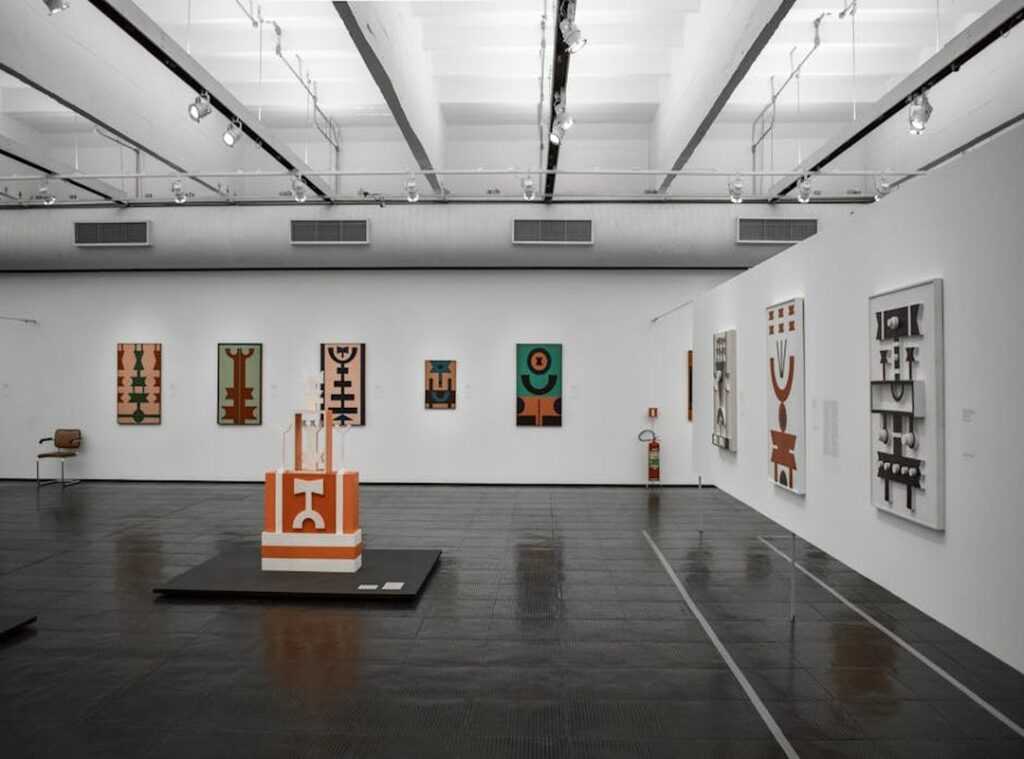
You walked into that gallery on the Arcachon Bay waterfront and immediately felt out of place.
Pine scent. Salt air. That hush right before someone clinks a wine glass.
You’re holding a glass you didn’t ask for and staring at a painting you can’t name.
Sound familiar?
I’ve been tracking exhibitions here for over a decade. Not just the big names (the) ones with press releases and glossy brochures (but) the pop-ups in converted boathouses, the summer shows in Saint-Jean-de-Luz, the quiet studio open days in La Teste.
I know which galleries update their websites (and which ones haven’t changed theirs since 2019).
I know when the local artists’ co-op rotates shows. And when they slowly cancel them.
This isn’t French art tourism fluff. You don’t want museum hours in Paris or vague advice about “finding your inner curator.”
You want to know what’s up right now, where it is, and whether it’s worth skipping lunch for.
I’ll tell you.
No gatekeeping. No jargon. Just what’s real, what’s open, and what actually matters.
That’s why this guide exists.
It answers the question you typed into Google five minutes ago.
Exhibition Art Arcachdir
Arcachon’s Art Isn’t Painted. It’s Tidal
I’ve walked those dunes at low tide and watched artists haul driftwood like it’s sacred timber.
Arcachon doesn’t do art about the coast. It does art with the coast.
Tides dictate studio hours. Oyster farmers sketch between harvests. The dunes shift.
And so do the installations.
That’s why you won’t find a big museum here. No marble halls. No climate-controlled vaults.
Just Galerie L’Éclat in a narrow street, and pop-ups inside Belle Époque villas where salt still bleeds through the plaster.
(Yes, the paint peels. That’s part of the show.)
The lack of institutional weight means shows change fast. Artists test ideas live. You talk to them while they’re sanding a frame.
No PR filter. No “curatorial statement” before the first sip of wine.
In 2023, ‘Lignes de Flot’ used actual tide charts and water-stained driftwood to trace rising sea levels along the shore. Not metaphor. Measurement.
This is site-responsive art (temporary,) tactile, rooted.
It’s not made for shipping crates or biennale catalogs.
It’s made for people who live here. Who smell the oysters at dawn. Who know which villa creaks loudest when the wind hits from the west.
If you want art that breathes with the place. Not over it (start) with the Arcachdir context.
Exhibition Art Arcachdir isn’t hung. It’s anchored.
And if your gallery doesn’t leak a little saltwater? It’s probably trying too hard.
Where to Find Real Art Right Now in Arcachon
I check these spots weekly. Not because I’m obsessed. I just hate showing up to an empty gallery.
Espace Culturel La Halle is the municipal hub. Open Tuesday. Sunday, 10 a.m.
(7) p.m. Free entry. Wheelchair accessible.
Their front desk posts current shows on a chalkboard. No website updates needed.
Galerie Le Pignon does contemporary only. Small space. Open Wednesday (Saturday,) 2. 7 p.m.
Donation-based. No reservation. You’ll see artists from Bordeaux and Biarritz, not just locals.
Villa Thuret rotates residencies every six weeks. Exhibitions happen inside the residency studio. Not a separate room.
Check their Instagram bio link every Thursday. They post new dates there first.
Pop-ups? The old train station hosts one-off shows. Les Abattoirs courtyard gets used for summer sculpture walks.
Neither has fixed hours. You walk by. You look.
You go in.
Don’t trust Google Events. It misses 80% of Arcachon’s Exhibition Art Arcachdir. Too small, too local, too word-of-mouth.
Use the official Tourist Office ‘Agenda Culturel’. Filter by “exhibitions” and “Arcachon”. Or subscribe to Bassin Arts Digest.
It’s free. It arrives every Friday. It names names and gives addresses.
Pro tip: Call the tourist office’s cultural desk. Ask for “the spreadsheet”. They’ll email it.
It lists private studio openings and vernissages never posted online.
I’ve gotten into three shows that way. One was in a fisherman’s shed. Another was behind a bakery.
No fluff. Just art.
When to Go for Real Art. Not Just Crowds
April to June? You’ll see emerging artists painting outside. I like it (but) only if you don’t mind sharing a bench with three art students sketching the same tree.
July and August look busy on the calendar. Don’t believe it. Many local artists are gone.
Showing in Biarritz or Berlin instead.
September is where it clicks. Harvest themes, photo festivals, quiet galleries, full catalogs. This is the sweet spot.
October brings the Arcachon Biennale (odd years), and that one-night Nuits Blanches event where galleries stay open until 3 a.m. (Yes, people actually do the walk. No, I won’t judge.)
November through March? Solo shows only (but) intense ones. Heated spaces.
Fewer people. More time with the work.
Go Tuesday (Thursday.) Gallerists are there. You can ask questions. You won’t wait ten minutes just to see the left side of a canvas.
You can read more about this in Exhibitions arcachdir.
Some venues close in May and November. For maintenance or staff holidays. Always check opening times before you drive there.
You want depth, not density. Variety, not volume.
That’s why I always point people to the Exhibitions arcachdir page first (not) for dates, but for who’s actually showing right now.
Does “Exhibition Art Arcachdir” sound official? It’s not. It’s just what locals say when they mean the real stuff, not the postcard version.
Skip summer. Come in September. Thank me later.
How to Actually See the Show in Arcachon
I used to walk into exhibitions here and feel like I was reading a menu in French without a dictionary.
Then I learned: sable isn’t just sand. It’s memory held in sediment. And bassine?
That’s not just a lagoon (it’s) hydrology made visible.
You’ll spot it in titles, wall texts, even artist bios. If you know what to look for.
Ask staff two questions. Just those two:
What changed during the installation?
Which piece was hardest to place in this space?
They’ll tell you more than any brochure.
Works made in situ? Look for oyster shells on the floor. Pine resin smeared on canvas.
Clay that still smells like the Bassin. Or a title naming Cap Ferret, Dune du Pilat, or Île aux Oiseaux.
That’s not decoration. That’s location speaking.
Skip the espresso at the chain café. Hit Café des Artistes before the show instead. Walk the Sentier des Arts after the vernissage (sculptures) rusting slowly in the salt air.
You can read more about this in Exhibition Paint Arcachdir.
Pick up a handmade catalogue from Librairie du Bassin. Paper stock matters. So does who printed it.
Wine at the opening? It’s almost always Château Lestrille. Say that name.
Watch how fast the conversation shifts from “what is art?” to “who made this possible?”
This isn’t about being clever. It’s about paying attention like a local. Not a tourist.
Arcachon Art Isn’t Waiting for You
I’ve been there. Standing in front of a closed gallery door, wondering if I missed it. You don’t want another list.
You want to know. Not guess. Where and when the real work shows up.
So here’s what works:
Grab the Tourist Office’s unlisted spreadsheet. Go in September. Not June, not October.
Ask “Who made this?” and “Where did it begin?”
That’s how you stop being a visitor and start being part of it.
Exhibition Art Arcachdir isn’t about big names or glossy brochures.
It’s about standing two feet from a painting that smells like salt and pine resin.
It’s about talking to the person who hung it.
Your pain? Showing up unprepared. And walking away empty.
Fix it now. Open the Arcachon Tourist Office website. Go to ‘Agenda Culturel’.
Bookmark it. Set a Monday morning reminder.
Do it before you close this tab.
The next exhibition isn’t just on the wall (it’s) waiting where land, water, and creativity meet.
 Jessica Elsassie has opinions about inspiration and ideas for artists. Informed ones, backed by real experience — but opinions nonetheless, and they doesn't try to disguise them as neutral observation. They thinks a lot of what gets written about Inspiration and Ideas for Artists, Art Collecting Tips, Artist Profiles and Interviews is either too cautious to be useful or too confident to be credible, and they's work tends to sit deliberately in the space between those two failure modes.
Reading Jessica's pieces, you get the sense of someone who has thought about this stuff seriously and arrived at actual conclusions — not just collected a range of perspectives and declined to pick one. That can be uncomfortable when they lands on something you disagree with. It's also why the writing is worth engaging with. Jessica isn't interested in telling people what they want to hear. They is interested in telling them what they actually thinks, with enough reasoning behind it that you can push back if you want to. That kind of intellectual honesty is rarer than it should be.
What Jessica is best at is the moment when a familiar topic reveals something unexpected — when the conventional wisdom turns out to be slightly off, or when a small shift in framing changes everything. They finds those moments consistently, which is why they's work tends to generate real discussion rather than just passive agreement.
Jessica Elsassie has opinions about inspiration and ideas for artists. Informed ones, backed by real experience — but opinions nonetheless, and they doesn't try to disguise them as neutral observation. They thinks a lot of what gets written about Inspiration and Ideas for Artists, Art Collecting Tips, Artist Profiles and Interviews is either too cautious to be useful or too confident to be credible, and they's work tends to sit deliberately in the space between those two failure modes.
Reading Jessica's pieces, you get the sense of someone who has thought about this stuff seriously and arrived at actual conclusions — not just collected a range of perspectives and declined to pick one. That can be uncomfortable when they lands on something you disagree with. It's also why the writing is worth engaging with. Jessica isn't interested in telling people what they want to hear. They is interested in telling them what they actually thinks, with enough reasoning behind it that you can push back if you want to. That kind of intellectual honesty is rarer than it should be.
What Jessica is best at is the moment when a familiar topic reveals something unexpected — when the conventional wisdom turns out to be slightly off, or when a small shift in framing changes everything. They finds those moments consistently, which is why they's work tends to generate real discussion rather than just passive agreement.