Setting the Scene
Where Art Meets Architecture
Tucked inside a converted railroad depot on the east side of Portland, Eli Banks’ studio feels as much like a sanctuary as it does a workspace. The environment balances a sense of history with modern artistic purpose gritty, industrial bones softened by thoughtful design.
Location: A reimagined industrial space with a creative pulse
Design Aesthetic: Minimalist yet textural, intentional without being sterile
Atmosphere: Calm, focused, and removed from digital noise
The Studio’s Sensory Palette
From the moment you step inside, the space engages your senses. There’s a quiet hum in the background, the kind that only a seasoned, well worn furnace can provide. The scent in the air is unmistakable: a layered mix of primer, wood oils, and time.
Lighting: Natural light floods through clerestory windows, glowing across canvases and worktables alike
Sound: Subtle machinery hums underline the quiet with warmth, rather than disruption
Scent: A blend of art materials reflecting the tactile, layered nature of Banks’ process
A Space Built for Flow
The layout supports uninterrupted creation. High ceilings give a sense of vertical freedom; textured materials from reclaimed wood floors to linen canvas rolls contribute to an environment where form and feeling are in constant dialogue.
This isn’t just a studio it’s a reflection of the work it contains: layered, intentional, and surprisingly serene.
Daily Rituals and Creative Rhythms
Eli Banks structures each day around presence and intention rhythm matters more than routine. While no two days in the studio look identical, there’s a quiet consistency to how his creative process flows.
The Morning Warm Up
Before touching any materials, Banks begins his day away from the screen:
Sketchbooks open before inboxes He often starts with quick graphite studies or conceptual scribbles that inform larger works.
Espresso in hand Always strong, always black, grounding him into the day.
Curated playlists From avant garde jazz to ambient drone, soundscapes help set focus without distraction.
“I avoid screens before noon to keep my mind clean,” Banks says. It’s a form of sensory discipline that carries into his artistry intentional, restrained, deeply felt.
Process, Not Pattern
Though there’s no fixed formula, each canvas typically follows a cyclical progression:
Initial drawing Often spontaneous, guided by instinct rather than plan.
Pause and reassess Banks steps away frequently, letting composition reveal itself over time.
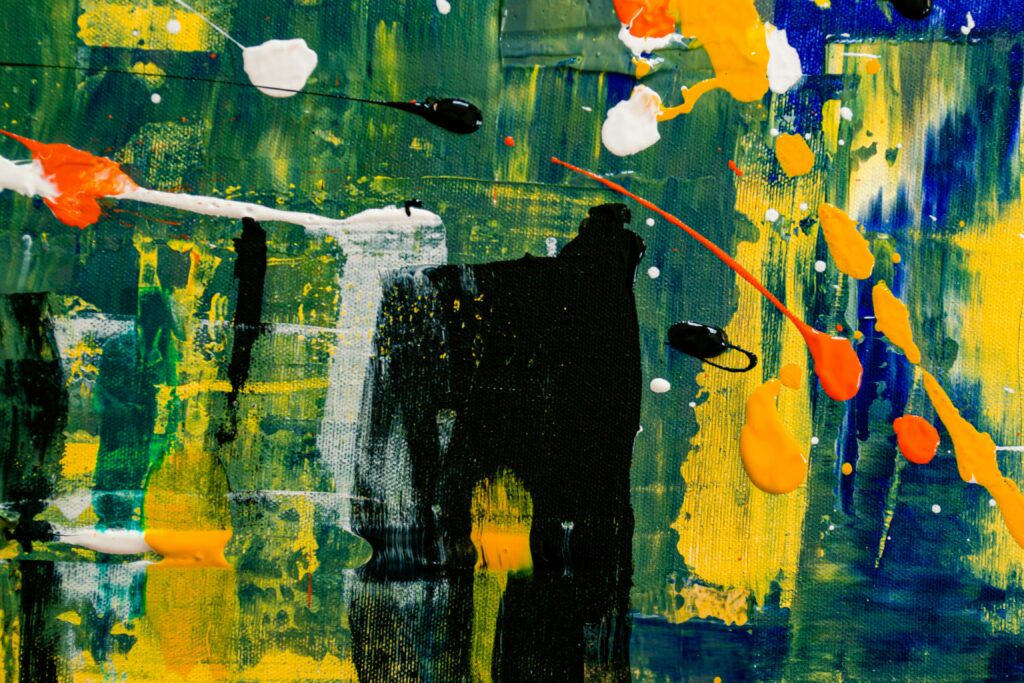
Layer, then subtract Acrylics, graphite, sometimes textile fragments are added and just as often, erased or obscured.
His approach is both meditative and kinetic. The work is shaped as much by quiet observation as by bold physical gestures.
Intuitive Structure
Despite the loose boundaries, there is structure:
Mornings are the warm up.
Midday is for heavier experimentation.
Afternoons shift toward refinement or stepping away entirely if intuition says, “not today.”
The result is a practice led by internal rhythm rather than external urgency. It’s a discipline one where time is measured in layers, not hours.
Tools of the Trade

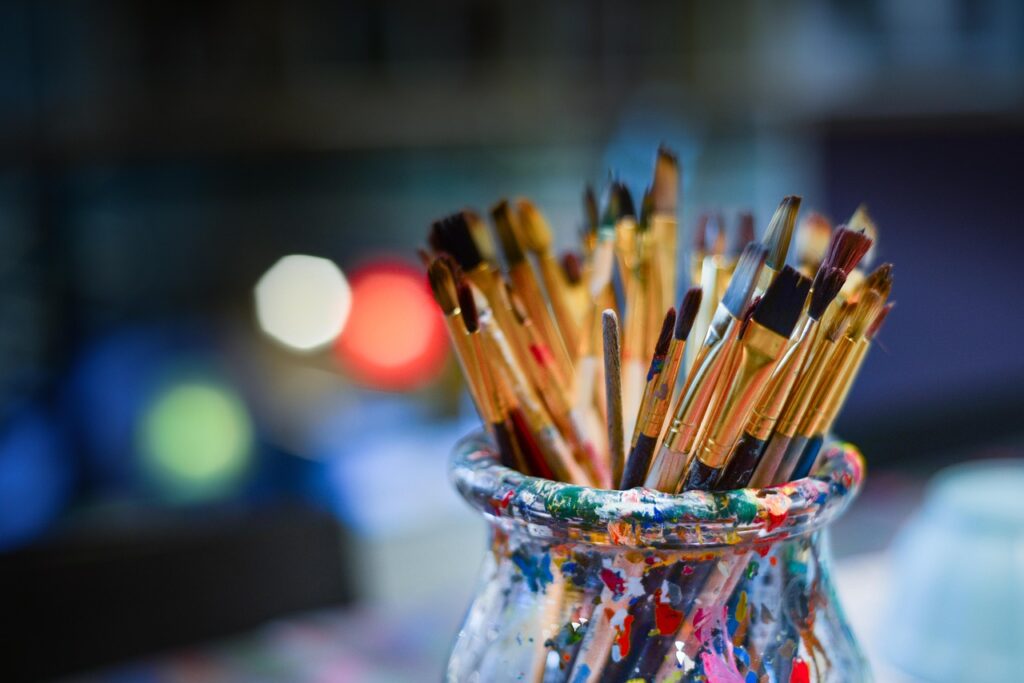
Eli Banks doesn’t buy into the idea that an artist’s materials are purely functional. His tools tell stories sometimes literally. His mixed media arsenal ranges from graphite and acrylic to oil bars, metal leaf, and scraps of old textiles. Nothing is off limits. If it holds a mark or a memory, it has a place.
The surfaces, too, defy convention. Doors pulled from alleyways. Chunks of wood left behind in construction zones. Thick, raw edged handmade paper stacked against the wall. Every piece is chosen more for its presence than polish. Banks often says, “The surface has already lived a life I’m just building on top of it.”
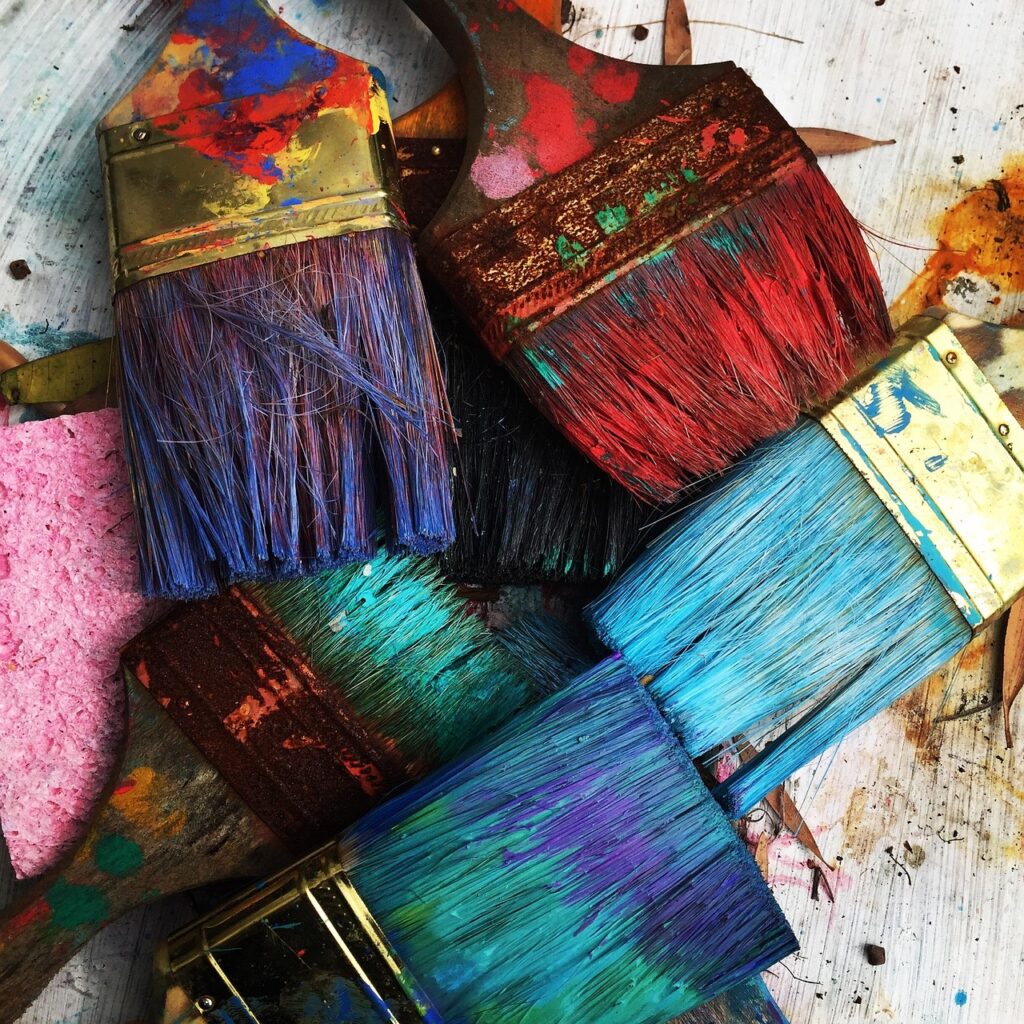
Even the tools themselves are either customized or invented. He’s crafted his own brushes, trimmed to suit the way he blocks in color or scratches back through layers. His drying rack? Built by hand. It doubles as wall storage and looks more like sculpture than hardware.
Sustainability isn’t a marketing angle here; it’s baked into the practice. Most materials are repurposed, salvaged, or locally found. Not because it’s trendy, but because it makes sense to him, to the work, to the planet.
Themes That Drive the Work
Eli Banks doesn’t chase trends. He wrestles with them. Identity, climate fatigue, and digital disconnect aren’t just theories in his work they’re tensions he drags across canvas, sometimes gently, sometimes like a blunt object.
His current series leans into how structures both physical and emotional shape memory. These aren’t literal buildings. They’re fractured walls, half formed outlines, and ghosted textures that hint at something remembered but unstable. It’s personal but not precious. The kind of work that leaves open space for viewers to bring their own history.
“Every work is a partial excavation, a partial offering,” Banks says. And that’s the key. Nothing finished. Nothing fully explained. Just layers of story, of material, of what we try to hang on to and inevitably lose.
For a wider conversation on how artists are exploring identity today, head over to Exploring Identity Through Art: Interview with Yasmine Khalil.
What Keeps Him Grounded in 2026
Despite growing attention and an expanding international presence, Eli Banks keeps his feet on the ground. One way he does that is through a small circle of fellow artists he trusts implicitly people who aren’t impressed by hype. Every Wednesday evening, they gather in his studio or someone else’s nearby loft, offering direct, deliberate critiques. No soft gloves, no ego stroking. These sessions aren’t about polishing they’re about pressure testing ideas and sharpening instincts.
Fridays are a different energy. That’s when Banks opens the studio doors to the public for a few hours. Students, collectors, curious passersby it’s a mix. Some ask about technique, others just soak in the space. He views it as an open channel between process and audience. “Art can’t just be made behind closed doors,” he says. “At least not all the time.”
At the core of it all is reflection on what it means to be a working artist when attention spans are quantifiable, and algorithms often decide who gets seen. Banks doesn’t rant against platforms or tech, but he’s clear eyed: the more reactive the internet gets, the more he doubles down on intentionality. Sharing just enough to stay part of the dialogue, resisting the churn for churn’s sake. It’s a quiet rebellion, practiced in plain sight.
Looking Ahead
Eli Banks is slated for a solo show in Berlin come mid 2026. The venue a former printworks turned contemporary gallery mirrors his taste for spaces with muscle and memory. He’s keeping the details close for now, but has hinted at larger scale works and a deeper dive into architectural forms.
In parallel, Banks is co building a new installation with textile artist Maya Viers. Still in the early stages, the collaboration leans into material tension rough against soft, rigid lines softened by drape and dye. It’s part sculpture, part conversation, and if all goes right something you can walk into and feel.
At the core of both projects is a tug of war he never seems to settle: structure versus spontaneity. Banks continues to navigate the line between precision and play, between the solitude that fuels his practice and the community that challenges it. What’s ahead isn’t just more work it’s a slow, deliberate evolution.
 There is a specific skill involved in explaining something clearly — one that is completely separate from actually knowing the subject. Jeffery Youngerston has both. They has spent years working with art collecting tips in a hands-on capacity, and an equal amount of time figuring out how to translate that experience into writing that people with different backgrounds can actually absorb and use.
Jeffery tends to approach complex subjects — Art Collecting Tips, Artist Profiles and Interviews, Art Market Trends being good examples — by starting with what the reader already knows, then building outward from there rather than dropping them in the deep end. It sounds like a small thing. In practice it makes a significant difference in whether someone finishes the article or abandons it halfway through. They is also good at knowing when to stop — a surprisingly underrated skill. Some writers bury useful information under so many caveats and qualifications that the point disappears. Jeffery knows where the point is and gets there without too many detours.
The practical effect of all this is that people who read Jeffery's work tend to come away actually capable of doing something with it. Not just vaguely informed — actually capable. For a writer working in art collecting tips, that is probably the best possible outcome, and it's the standard Jeffery holds they's own work to.
There is a specific skill involved in explaining something clearly — one that is completely separate from actually knowing the subject. Jeffery Youngerston has both. They has spent years working with art collecting tips in a hands-on capacity, and an equal amount of time figuring out how to translate that experience into writing that people with different backgrounds can actually absorb and use.
Jeffery tends to approach complex subjects — Art Collecting Tips, Artist Profiles and Interviews, Art Market Trends being good examples — by starting with what the reader already knows, then building outward from there rather than dropping them in the deep end. It sounds like a small thing. In practice it makes a significant difference in whether someone finishes the article or abandons it halfway through. They is also good at knowing when to stop — a surprisingly underrated skill. Some writers bury useful information under so many caveats and qualifications that the point disappears. Jeffery knows where the point is and gets there without too many detours.
The practical effect of all this is that people who read Jeffery's work tend to come away actually capable of doing something with it. Not just vaguely informed — actually capable. For a writer working in art collecting tips, that is probably the best possible outcome, and it's the standard Jeffery holds they's own work to.