I hate when craft blogs pretend time doesn’t matter.
You love making things. You want that quiet focus. But your day is already full (and) you’re tired of choosing between creativity and sleep.
So why do most “quick craft” guides feel like cheap knockoffs? Like they’re just handing you glue sticks and hoping you won’t notice the emptiness.
I’ve spent years testing, simplifying, and teaching handmade techniques to people who work full-time, raise kids, or are picking up a needle for the first time.
No sewing machine. No fancy tools. No prior experience needed.
Just real results (in) under an hour.
And no, “quick” doesn’t mean “basic.” It means intentional. Thoughtful. Done right.
I’ve cut out every step that doesn’t earn its place.
Fast Crafts Lwmfcrafts isn’t about rushing. It’s about respecting your time and your hands.
This article gives you three things: project types that actually finish fast, material shortcuts that don’t sacrifice quality, and mindset shifts that keep speed from feeling frantic.
You’ll walk away with something made (not) just started.
And yes, it’ll feel good to hold it.
Why “Quick” Doesn’t Mean “Cheap” (Real) Handmade Speed
I make things fast. Not rushed. Not sloppy. Fast.
That only works because I built three rules into every project from day one: intentional repetition, modular construction, and zero-waste material use.
Intentional repetition means I fold the same paper shape five ways (not) to bore myself, but so one cut becomes five cards. Same with fabric: one scrap gives me a coaster and a keychain. No extra measuring.
No second guessing.
Modular construction? I design parts that snap together. Like Lego for crafters.
You build once, reuse forever.
Zero-waste isn’t just ethical. It’s faster. Less sorting.
Now. Let’s name the speed traps: over-planning, perfectionism, and tool hoarding. Each one steals hours.
Less tossing. Less time hunting for “just the right piece.”
I’ve fallen for all three. (Especially the glue gun collection.)
Lwmfcrafts proves this works across dozens of projects.
Fast Crafts Lwmfcrafts isn’t magic. It’s method.
Here’s what it saves you:
| Project Type | Traditional Time | With These Principles |
|---|---|---|
| Greeting Cards | 45 min | 12 min |
| Stitched Coasters | 68 min | 23 min |
You don’t need more time. You need better structure.
5 Fast Crafts Lwmfcrafts You Can Make Tonight
I pulled these from my own drawer last Tuesday. No shopping. No waiting.
Embroidered hoop art: 32 minutes. You need a thrifted napkin, embroidery floss, a cheap hoop, a needle, and a spoon (press fabric taut instead of buying a stretcher). The thread glides.
Your fingers feel the weave. That’s the joy (not) the finished piece, but the pull of floss through cloth.
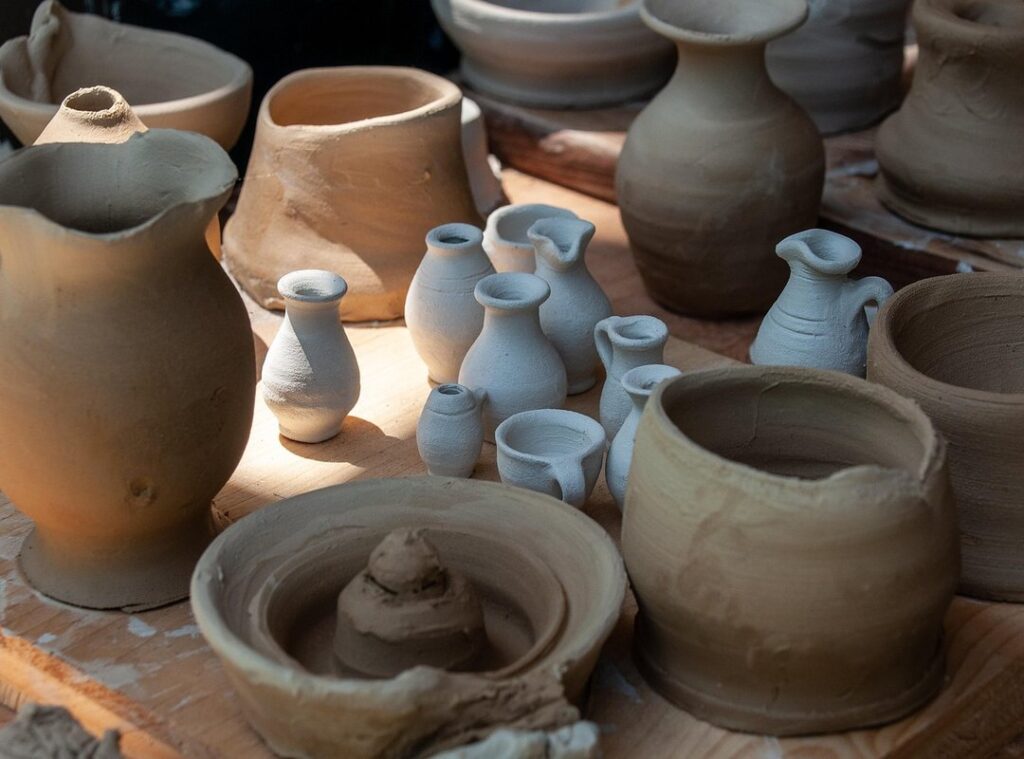
Stamped clay jewelry: 40 minutes. Air-dry clay, a wine cork (stamp), a butter knife (cut), oven mitts (yes, even for 10 minutes), and your thumb (for texture). Why it works?
No kiln. No firing. Just press, cut, dry, wear.
No-sew felt bookmarks: 18 minutes. Felt scraps, glue stick, scissors, paperclip (to hold while drying), and a pen (draw your shape). Glue sticks grab fast.
You see the shape hold immediately. That’s dopamine.
Pressed-flower resin pendants: 38 minutes. Dried flowers, clear glue (not epoxy. Safer, faster), tiny molds (bottle caps work), toothpick, tweezers (or folded paper).
No heat. No fumes. Just layer, wait 2 hours, pop out.
Woven yarn wall hanging: 45 minutes. Cardboard (loom base), yarn, fork (comb), tape, scissors. The thump-thump-thump of weaving.
The weight of yarn in your palm. Real rhythm.
Fast Crafts Lwmfcrafts isn’t about perfection. It’s about your hands doing something real while your brain unspools.
You already have most of this. Go open that drawer.
I covered this topic over in Easy Crafts.
The 10-Minute Prep Routine That Doubles Your Making Efficiency
I used to waste 22 minutes just starting a craft project. Sorting thread. Hunting scissors.
Remembering where I left the hoop.
Then I switched to project family prep. Not by tool. Not by material.
By what the thing is. Stitch & Stitch. Paint & Patch.
Glue & Go.
That changed everything.
Grab-and-go kits beat open bins every time. Open bins make you choose while you’re tired and distracted. Kits remove the decision.
You grab. You go. Done.
(Show a small shoebox labeled ‘Stitch & Stitch’ with embroidery hoop, 3 colors floss, needle, and fabric scrap.)
I use the 3-2-1 Rule:
3 minutes to prep before starting. 2 minutes to tidy mid-session (not) after. 1 minute to snap a photo or jot one line before stopping.
Why? Because momentum dies fast. And cleanup during keeps your brain in flow.
One reader cut start time from 22 minutes to 4. No magic. Just consistency.
Just boxes.
You’re not lazy for taking too long to begin.
You’re just unprepared. And that’s fixable.
If you want low-friction making, try Easy Crafts Lwmfcrafts. It’s where I stole half these ideas. Fast Crafts Lwmfcrafts is real.
But only if you prep first.
When to Say “Done”. And Mean It
I used to sand the same wooden spoon for forty-five minutes. Because it felt unfinished. Even though it held soup just fine.
Completion markers are real. They’re not feelings. They’re things you can see or test: when the last knot is buried, when light passes evenly through the paper cutout, when the glue stops beading at the seam.
If it doesn’t have one, you’re guessing.
And guessing kills momentum.
You think rushing means sloppy. I think rushing means disrespecting your own time. Speed isn’t the enemy (indecision) is.
Before adding “one more detail”, ask yourself:
Does this serve function?
Does this add joy?
Would I still love it if it stayed like this?
Circle one thing you’ll let go of next time. Fraying edge. Uneven stitch.
I’ve thrown out three-quarters of my “final tweaks”. They never mattered. They just delayed the thing from being used.
Imperfect symmetry. Write it down. Then stop.
This isn’t about lowering standards.
It’s about trusting your hands more than your doubts.
If you’re still stuck on where to start with lighter, quicker making (check) out Light Crafts Lwmfcrafts. That’s where I learned to stop polishing and start playing. Fast Crafts Lwmfcrafts isn’t a race.
It’s permission.
Start Small, Start Tonight
I know you want to make something. But your brain says not now. Too tired.
Too busy. Too unsure where to even begin.
That’s why you’re here. Not for perfection. Not for a full craft room.
Just one thing. Made tonight.
Pick Fast Crafts Lwmfcrafts. One of the five. Any one.
Grab the supplies. Put them on the table. Do it before bed.
This isn’t about how much you produce. It’s about proving to yourself that you still show up. That your hands aren’t broken.
That presence is possible (even) for 40 minutes.
You don’t need more time. You need permission to start small. And you just got it.
Set the timer. Begin. Finish.
Snap the photo. Crooked stitches, uneven edges, all of it. Tag #QuickHandmadeLwmf.
We’re the #1 rated fast-craft community because people like you actually do it. Not someday. Tonight.
Your hands remember how to create. They just needed permission to start small.
 Jessica Elsassie has opinions about inspiration and ideas for artists. Informed ones, backed by real experience — but opinions nonetheless, and they doesn't try to disguise them as neutral observation. They thinks a lot of what gets written about Inspiration and Ideas for Artists, Art Collecting Tips, Artist Profiles and Interviews is either too cautious to be useful or too confident to be credible, and they's work tends to sit deliberately in the space between those two failure modes.
Reading Jessica's pieces, you get the sense of someone who has thought about this stuff seriously and arrived at actual conclusions — not just collected a range of perspectives and declined to pick one. That can be uncomfortable when they lands on something you disagree with. It's also why the writing is worth engaging with. Jessica isn't interested in telling people what they want to hear. They is interested in telling them what they actually thinks, with enough reasoning behind it that you can push back if you want to. That kind of intellectual honesty is rarer than it should be.
What Jessica is best at is the moment when a familiar topic reveals something unexpected — when the conventional wisdom turns out to be slightly off, or when a small shift in framing changes everything. They finds those moments consistently, which is why they's work tends to generate real discussion rather than just passive agreement.
Jessica Elsassie has opinions about inspiration and ideas for artists. Informed ones, backed by real experience — but opinions nonetheless, and they doesn't try to disguise them as neutral observation. They thinks a lot of what gets written about Inspiration and Ideas for Artists, Art Collecting Tips, Artist Profiles and Interviews is either too cautious to be useful or too confident to be credible, and they's work tends to sit deliberately in the space between those two failure modes.
Reading Jessica's pieces, you get the sense of someone who has thought about this stuff seriously and arrived at actual conclusions — not just collected a range of perspectives and declined to pick one. That can be uncomfortable when they lands on something you disagree with. It's also why the writing is worth engaging with. Jessica isn't interested in telling people what they want to hear. They is interested in telling them what they actually thinks, with enough reasoning behind it that you can push back if you want to. That kind of intellectual honesty is rarer than it should be.
What Jessica is best at is the moment when a familiar topic reveals something unexpected — when the conventional wisdom turns out to be slightly off, or when a small shift in framing changes everything. They finds those moments consistently, which is why they's work tends to generate real discussion rather than just passive agreement.