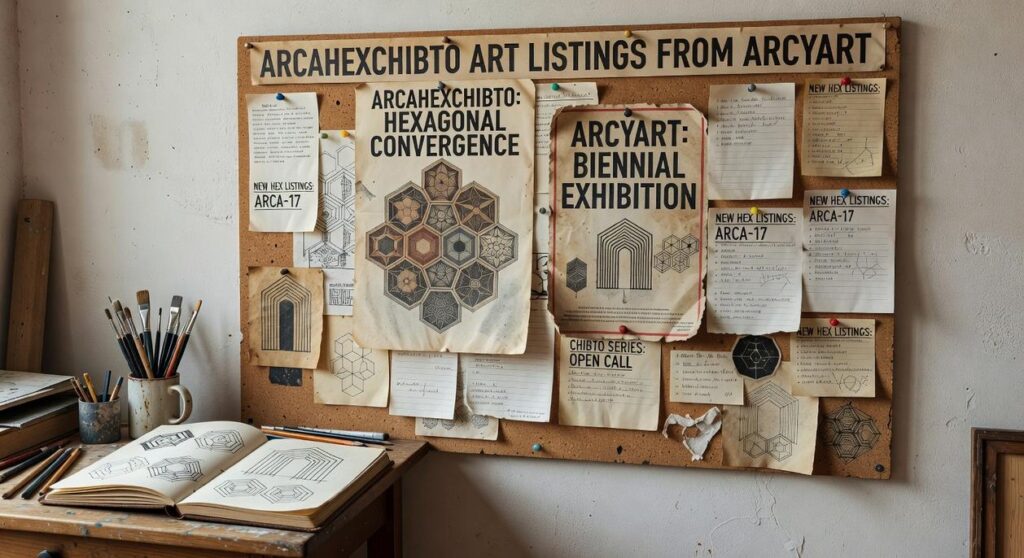
I’ve spent months going through every piece Arcahexchibto has posted on ArCYArt.
You’re probably here because you want to see their work but don’t know where to start. The portfolio keeps growing and it’s hard to know what you’re looking at without context.
Here’s what I found: Arcahexchibto’s art falls into clear thematic collections. Once you see the patterns, the whole body of work makes sense.
I cataloged every piece on the platform. Not just scrolling through. Actually analyzing what connects each work and how the themes develop.
This article organizes arcahexchibto art listings from arcyart into distinct series. I’ll show you which collections define their style and which pieces matter most to collectors right now.
We’ve built the most complete breakdown of their ArCYArt portfolio available. I cross-referenced dates, themes, and techniques to give you a clear map of their creative output.
You’ll see how their work is structured, what each series explores, and where to focus if you’re collecting or just want to understand their vision.
No fluff about artistic movements. Just a straight guide to what Arcahexchibto has created and where to find it on ArCYArt.
Understanding the Arcahexchibto Aesthetic: Core Themes and Visual Language
I’ve been studying Arcahexchibto’s work for a while now.
What strikes me first is how it refuses to pick a side. You see digital precision colliding with organic chaos. Clean lines breaking apart into something that feels almost alive.
The core aesthetic lives in that tension.
Some critics say this approach is just trendy postmodern mixing. That it doesn’t commit to anything real. But I think they’re missing the point entirely.
The work isn’t about choosing between digital and organic. It’s about showing how those boundaries don’t really exist anymore. (We live in that space whether we admit it or not.)
Nature and technology don’t oppose each other here. They corrupt each other. Vines grow through circuit boards. Data streams form root systems. It’s digital decay as a creative force.
The architecture of dreams shows up constantly. Structures that follow their own logic. Spaces that couldn’t exist but somehow feel familiar.
Here’s what I think happens next. The arcahexchibto art listings from arcyart will start showing more work that pushes into interactive spaces. Not just static images but environments you can move through.
The color palettes do something interesting. Synthetic purples bleed into earth tones. Neon greens fade into moss. The textures layer like sediment or corrupted files.
What makes this work stand out? It doesn’t try to resolve anything. Most digital art either celebrates technology or warns against it. This just shows what is.
Collection Spotlight: The ‘Digital Glitch’ Series
I want to show you something that changed how I think about mistakes.
The Digital Glitch series at arcahexchibto isn’t about perfection. It’s about what happens when systems break down and something unexpected emerges.
Some collectors will tell you that art should be clean. Intentional. That celebrating errors is just lazy conceptualism dressed up as depth.
I used to think that way too.
But then I started really looking at what happens when data corrupts. When pixels fragment. When software fails in ways programmers never anticipated.
There’s something there. Something we miss when everything works exactly as planned.
Take ‘Cascading Failure’ for instance. The piece uses deep blues that bleed into electric oranges. The colors don’t just sit next to each other. They appear to move, like watching a system collapse in real time. You can almost feel the momentum of it. In the same way that “Cascading Failure” immerses the viewer in a dynamic interplay of color, the artwork “Arcahexchibto” captivates with its intricate design, drawing players into a mesmerizing visual experience that echoes the chaos of a collapsing universe.
‘Memory Leak’ takes a different approach. The composition fragments across the canvas in a way that mirrors how digital memory actually breaks apart. It’s not random. There’s a pattern to how things fall apart, and this piece captures that perfectly.
Then there’s ‘Blue Screen Symphony.’
This one hits different. We’ve all seen that blue screen. That moment when everything stops and you realize how much you depend on technology to just work. The piece doesn’t mock that dependence. It sits with it. Makes you feel the weight of it.
Now, you might be wondering what comes next. If you’re drawn to this series, you’re probably curious about how these pieces fit into your space or what other artists are working in this vein. I’ll be covering that soon, along with how the glitch aesthetic is shaping current market interest.
Collection Spotlight: ‘Biomechanical Hybrids’
I created the Biomechanical Hybrids collection because I kept seeing the same question in galleries.
Where does the body end and the machine begin?
Not in some philosophical way. In a real, visual sense.
Some critics say this kind of work is too cold. That merging anatomy with mechanical elements strips away what makes us human. They want art that celebrates the organic without contamination.
But that’s not how we live anymore.
Your body already depends on technology. Your phone is practically an extension of your nervous system. (Try going a day without it and see what happens.)
The collection started with The Silicon Heart. I spent weeks studying cardiac anatomy and circuit board patterns. The piece shows a human heart where each chamber contains microprocessor arrays and fiber optic veins. It’s not about replacement. It’s about integration.
When I exhibited it at art arcahexchibto, people stood in front of it for minutes. Some saw beauty. Others saw something unsettling.
Both reactions were right.
Vertebral Towers came next. I took the human spine and stretched it into a cityscape. Each vertebra becomes a building. The spinal cord transforms into highways and power lines. It’s surreal but it makes sense when you think about it. Cities are just collective nervous systems.
The piece measures six feet tall. I used mixed media because paint alone couldn’t capture the texture I needed.
Neural Network is probably the most complex piece in the series. I mapped actual neural pathways from MRI scans and overlaid them with data flow diagrams. The result shows how information moves through biological and digital systems in almost identical patterns.
A neuroscientist who saw it told me the accuracy was startling. Arcahexchibto Art Directory by Arcyart is where I take this idea even further.
These aren’t just pretty pictures. Each piece in Biomechanical Hybrids documents what’s already happening. We’re not becoming machines. We’re realizing we’ve always been systems of organized complexity.
The only difference now is we can see it.
Collection Spotlight: Interactive and Generative Creations
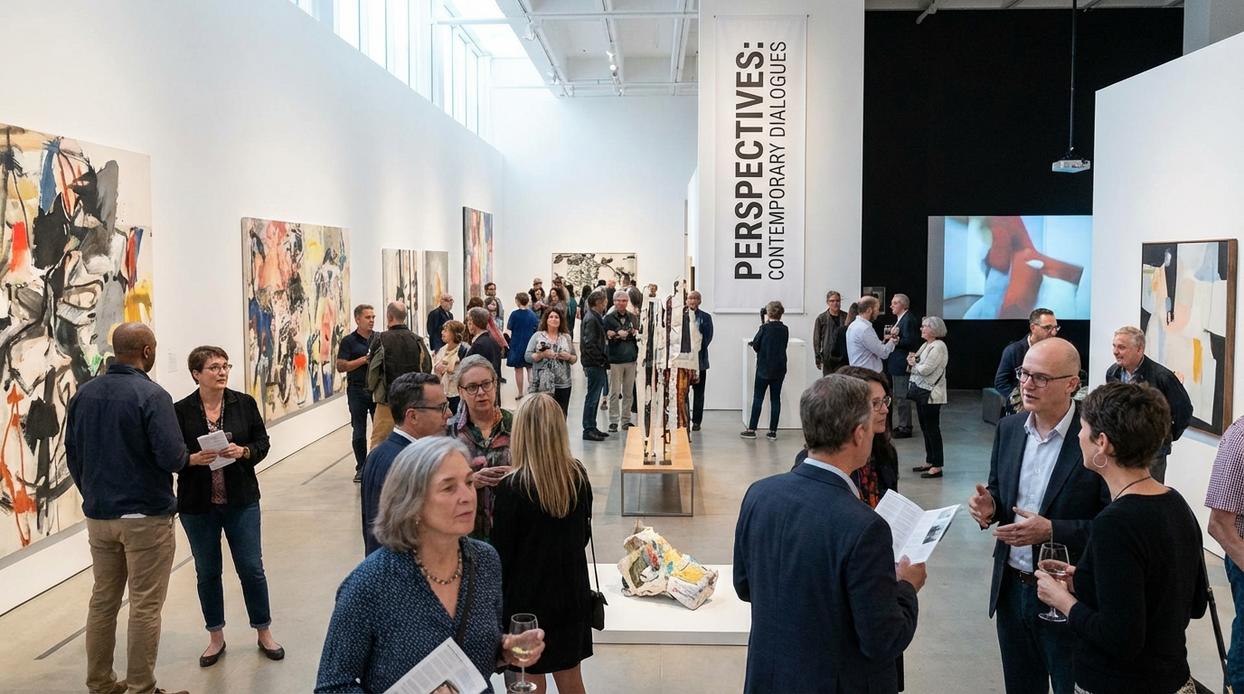
Art used to just hang on walls.
You looked at it. Maybe you thought about it. Then you moved on. As you scrolled through the vibrant landscapes of the latest gaming art, you paused for a moment, captivated by the intricate details of the Oil Paint Galleries Arcahexchibto, but ultimately, you decided to move on to the next adventure beckoning from your screen.
Not anymore.
What I’m seeing now at Arcahexchibto changes that entire relationship. These pieces don’t just sit there waiting for you. They respond. They shift. They become something different every single time you engage with them.
Some collectors tell me they prefer traditional work. They want something fixed. Something they can point to and say “this is what I own.” I understand that impulse.
But here’s what they’re missing.
Interactive and generative art isn’t less valuable because it changes. It’s more interesting precisely because it does.
Let me show you what I mean.
The Pieces Worth Your Attention
| Artwork | Type | What Makes It Different |
|---|---|---|
| ——— | —— | ————————- |
| Evolving Echoes | Generative | Changes over time and with interaction |
| The Color Stream | Interactive | Responds directly to viewer input |
Evolving Echoes is where I’d start if you’re new to this. The piece uses algorithms to generate patterns that shift based on time and how you interact with it. What you see today won’t be what you see next week. Or even tomorrow.
The system tracks your movements and adjusts the visual output accordingly. No two viewings are identical (which honestly makes traditional documentation almost pointless).
Then there’s The Color Stream. I cover this topic extensively in Can Canvas Paintings Be Rolled Arcahexchibto.
This one puts you in control. You influence the visual output directly through touch or motion. The colors respond to your input in real time. It’s less about observing art and more about creating it alongside the original algorithm.
What You Should Do
If you’re thinking about collecting in this space, start by experiencing the work in person. Screenshots don’t cut it here.
Visit during different times of day. Interact with the pieces multiple ways. See how they respond to different inputs.
For artists looking to explore these techniques, I recommend starting small. Build simple generative systems before you tackle complex interactive installations. The arcahexchibto art listings from arcyart show several entry points that won’t overwhelm you technically.
The real question isn’t whether this type of art has staying power.
It’s whether you’re ready to own something that refuses to stay still.
How to Explore and Collect Arcahexchibto’s Work on ArCYArt
Finding my work on ArCYArt is pretty straightforward.
Start by searching “arcahexchibto art listings from arcyart” in the platform’s search bar. My artist profile will pop up first. From there, you’ll see my complete collection organized by series.
The filtering tools are your friend here. Click on the filter icon and sort by creation date if you want to see my newest pieces. Or filter by medium if you’re specifically after oil paint galleries arcahexchibto style work versus digital pieces.
When you’re thinking about buying, check the edition size first. Smaller editions typically hold value better. Also make sure the certificate of authenticity is included (it should be listed in the piece details).
Now, you might be wondering what to do once you’ve found a piece you like. Should you buy immediately or wait?
That depends on the series. Limited editions move fast. If you’re on the fence about a piece, save it to your favorites and check back within a day or two. But if it’s marked as a final edition piece, don’t wait too long. If you’re an avid collector, keeping an eye on the rapidly changing availability of pieces like the coveted Art Arcahexchibto is essential, as final edition items tend to vanish within days.
Your Gateway to the World of Arcahexchibto
I created this guide because finding meaningful art online shouldn’t feel like wandering through a maze.
You wanted to understand Arcahexchibto’s work on ArCYArt. Not just see a random list of pieces but actually grasp what makes this artist’s vision distinct.
This isn’t another surface-level gallery tour. I’ve mapped out the collections and themes that define Arcahexchibto’s digital artistry so you can explore with context.
When you know the story behind the work, everything clicks differently.
You came here looking for structure and insight. Now you have both.
Here’s what matters: You can now move through Arcahexchibto’s portfolio with purpose. You understand the themes. You see the connections.
Visit Arcahexchibto’s official portfolio on ArCYArt and experience the full range of their work. The collections are waiting, and now you know exactly what you’re looking at.
 Ask Norvain Veythorne how they got into art collecting tips and you'll probably get a longer answer than you expected. The short version: Norvain started doing it, got genuinely hooked, and at some point realized they had accumulated enough hard-won knowledge that it would be a waste not to share it. So they started writing.
What makes Norvain worth reading is that they skips the obvious stuff. Nobody needs another surface-level take on Art Collecting Tips, Art Market Trends, Artist Profiles and Interviews. What readers actually want is the nuance — the part that only becomes clear after you've made a few mistakes and figured out why. That's the territory Norvain operates in. The writing is direct, occasionally blunt, and always built around what's actually true rather than what sounds good in an article. They has little patience for filler, which means they's pieces tend to be denser with real information than the average post on the same subject.
Norvain doesn't write to impress anyone. They writes because they has things to say that they genuinely thinks people should hear. That motivation — basic as it sounds — produces something noticeably different from content written for clicks or word count. Readers pick up on it. The comments on Norvain's work tend to reflect that.
Ask Norvain Veythorne how they got into art collecting tips and you'll probably get a longer answer than you expected. The short version: Norvain started doing it, got genuinely hooked, and at some point realized they had accumulated enough hard-won knowledge that it would be a waste not to share it. So they started writing.
What makes Norvain worth reading is that they skips the obvious stuff. Nobody needs another surface-level take on Art Collecting Tips, Art Market Trends, Artist Profiles and Interviews. What readers actually want is the nuance — the part that only becomes clear after you've made a few mistakes and figured out why. That's the territory Norvain operates in. The writing is direct, occasionally blunt, and always built around what's actually true rather than what sounds good in an article. They has little patience for filler, which means they's pieces tend to be denser with real information than the average post on the same subject.
Norvain doesn't write to impress anyone. They writes because they has things to say that they genuinely thinks people should hear. That motivation — basic as it sounds — produces something noticeably different from content written for clicks or word count. Readers pick up on it. The comments on Norvain's work tend to reflect that.