
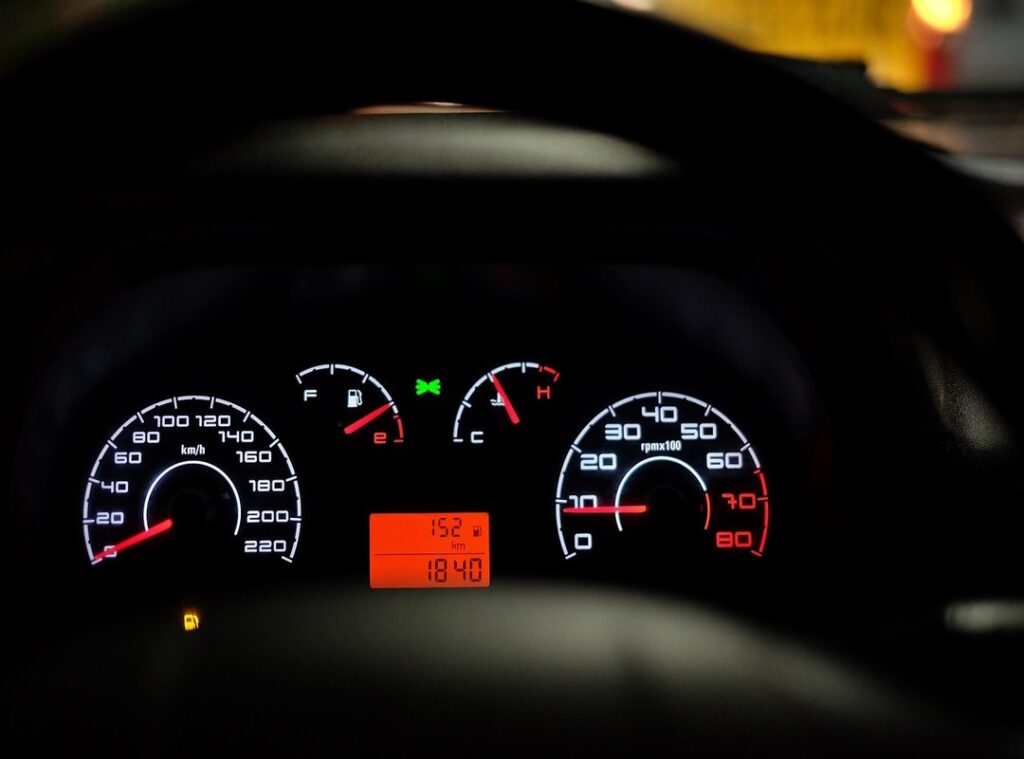
133 miles per hour (mph) is equal to approximately 214.04 kilometers per hour (kmh).
This article isn’t just about giving you the answer. I want to show you exactly how this conversion works so you can do it yourself.
Why is this important? Well, if you travel internationally, or if you’re into cars and sports like Formula 1, understanding both mph and kmh can be really useful.
I’ll walk you through a clear, step-by-step guide with practical examples and a simple formula. By the end, you’ll be able to convert any mph value to kmh with confidence.
Understanding the Basics: Miles vs. Kilometers
A mile is a unit of length in the imperial and US customary systems of measurement. It’s commonly used in the United States, United Kingdom, and a few other countries for road distances and speeds.
A kilometer, on the other hand, is a unit of length in the metric system, which is the standard for most of the world. The core difference? A kilometer is a shorter distance than a mile.
The fundamental conversion factor is this: 1 mile is exactly equal to 1.60934 kilometers. This number is the key to all conversions.
To help you visualize, think of it like comparing a yard to a meter. A yard is a bit shorter than a meter, just like a kilometer is shorter than a mile.
Let’s put this into practice. If you see a speed limit sign that says 20 mph, that’s about 32.1868 km/h. Or if you’re more into high speeds, 133 mph is about 214.04 kmh.
Understanding these basics can make a big difference when you travel or need to convert units. But hey, I get it. Sometimes these conversions can be confusing.
If you ever feel unsure, it’s okay to double-check with a calculator or an app.
The Step-by-Step Formula to Convert 133 MPH to KMH
Let’s get one thing straight: converting 133 mph to kmh isn’t rocket science. It’s a simple multiplication, and anyone can do it.
First, here’s the formula in plain language: Kilometers per Hour = Miles per Hour × 1.60934.
Now, let’s break it down step by step.
Step 1: Start with the value in miles per hour, which is 133.
Step 2: Multiply this value by the conversion factor, 1.60934. So, you do the math: 133 * 1.60934.
Step 3: The result of the calculation is 214.04222.
But here’s where I disagree with most people. They say you should always round to two decimal places. Why?
In many practical situations, that level of precision isn’t necessary. Rounding to one decimal place, 214.0, often makes more sense. It’s simpler and still accurate enough for most uses. Arcahexchibto
So, there you have it. 133 mph to kmh is 214.04 kmh if you must, but 214.0 kmh is just as good.
How Fast is 133 MPH in the Real World?
So, you’ve heard the number 133 mph. But what does that really mean? Let’s break it down.
Imagine a high-speed train like Amtrak’s Acela Express. It can hit around 150 mph. 133 mph is pretty close to that, but not quite there.
Now, think about supercars. A modern Ferrari or Lamborghini can go way past 133 mph. For them, 133 mph is just a brisk highway speed.
Not slow, but not their top speed either.
In nature, a Category 4 hurricane has wind speeds ranging from 130-156 mph. So, 133 mph is right in that range. That’s some serious power.
If you’re into sports, consider a professional baseball pitcher’s fastball, which is around 100 mph. 133 mph is significantly faster than that. Imagine how much more force that would have.
And for those who prefer metric, 133 mph to kmh is 214 kmh. That’s a lot of ground covered in a short time.
By comparing 133 mph to these familiar benchmarks, you can better understand just how fast it really is.
Quick Conversion Chart and Common Mistakes to Avoid

When you’re driving on the highway, it’s good to know how fast you’re actually going. Here’s a simple chart to help you convert common speeds from miles per hour (MPH) to kilometers per hour (KMH).
| MPH | KMH |
|---|---|
| 55 | 88.51 |
| 65 | 104.61 |
| 75 | 120.70 |
| 80 | 128.74 |
One of the most common mistakes is accidentally dividing by 1.60934 instead of multiplying. This would convert KMH to MPH, giving you an incorrect, lower number.
Using an overly simplified or inaccurate conversion factor, like 1.6, can also lead to significant errors, especially at higher speeds. For example, converting 133 mph to kmh using 1.60934 gives you 214.04 KMH. But if you use 1.6, you get 212.8 KMH.
That’s a noticeable difference.
Precision matters in scientific calculations and engineering specs. But for casual conversation, an approximation is usually fine.
Online calculators are handy tools, but understanding the formula is key. It lets you verify the information and do conversions on the fly.
Mastering Speed Conversions in Seconds
Converting 133 mph to kmh is a simple multiplication. To go from mph to kmh, always multiply by 1.60934.
You now have the exact answer (214.04 kmh) and the knowledge to convert any speed you encounter. Use the formula or the quick reference chart for your next conversion need.
Mastering this simple rule makes it incredibly easy to switch between imperial and metric systems.
 Jessica Elsassie has opinions about inspiration and ideas for artists. Informed ones, backed by real experience — but opinions nonetheless, and they doesn't try to disguise them as neutral observation. They thinks a lot of what gets written about Inspiration and Ideas for Artists, Art Collecting Tips, Artist Profiles and Interviews is either too cautious to be useful or too confident to be credible, and they's work tends to sit deliberately in the space between those two failure modes.
Reading Jessica's pieces, you get the sense of someone who has thought about this stuff seriously and arrived at actual conclusions — not just collected a range of perspectives and declined to pick one. That can be uncomfortable when they lands on something you disagree with. It's also why the writing is worth engaging with. Jessica isn't interested in telling people what they want to hear. They is interested in telling them what they actually thinks, with enough reasoning behind it that you can push back if you want to. That kind of intellectual honesty is rarer than it should be.
What Jessica is best at is the moment when a familiar topic reveals something unexpected — when the conventional wisdom turns out to be slightly off, or when a small shift in framing changes everything. They finds those moments consistently, which is why they's work tends to generate real discussion rather than just passive agreement.
Jessica Elsassie has opinions about inspiration and ideas for artists. Informed ones, backed by real experience — but opinions nonetheless, and they doesn't try to disguise them as neutral observation. They thinks a lot of what gets written about Inspiration and Ideas for Artists, Art Collecting Tips, Artist Profiles and Interviews is either too cautious to be useful or too confident to be credible, and they's work tends to sit deliberately in the space between those two failure modes.
Reading Jessica's pieces, you get the sense of someone who has thought about this stuff seriously and arrived at actual conclusions — not just collected a range of perspectives and declined to pick one. That can be uncomfortable when they lands on something you disagree with. It's also why the writing is worth engaging with. Jessica isn't interested in telling people what they want to hear. They is interested in telling them what they actually thinks, with enough reasoning behind it that you can push back if you want to. That kind of intellectual honesty is rarer than it should be.
What Jessica is best at is the moment when a familiar topic reveals something unexpected — when the conventional wisdom turns out to be slightly off, or when a small shift in framing changes everything. They finds those moments consistently, which is why they's work tends to generate real discussion rather than just passive agreement.