
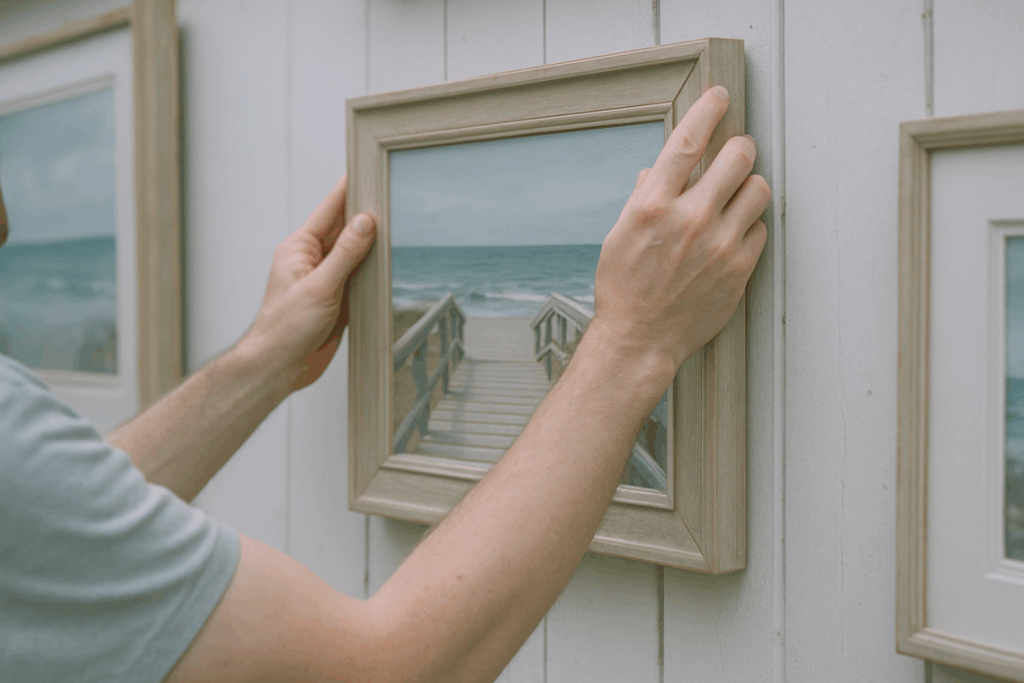
I’ve spent years walking through galleries and noticed something most people miss.
The paintings that stop you in your tracks? They’re not just well painted. They’re hung with precision that most visitors never think about.
You’ve probably stood in front of a painting in your own space and felt like something was off. Maybe it’s too high or the grouping feels scattered. The art itself is good but the presentation kills it.
How do galleries hang paintings arcahexchibto? It’s not guesswork.
There are specific heights, spacing rules, and hardware choices that professionals use every time. These aren’t secrets. They’re just techniques most people never learn.
I’ve watched curators work and talked to exhibition designers about their methods. The principles they follow are consistent across museums and high-end galleries.
This guide walks you through those exact techniques. You’ll learn the measurements that matter, why certain groupings work while others fall flat, and which hardware actually holds up.
Not theory. Just the practical framework that makes art feel right in a space.
The Foundation: Mastering the 57-Inch Centerline Rule
You walk into a gallery and something just feels right.
The art sits exactly where your eyes want to land. No craning your neck up or bending down to really see the piece.
That’s not luck.
Every professional space follows the same rule. And once you know it, you’ll spot when someone gets it wrong (which happens more often than you’d think).
The 57-inch centerline.
Here’s what it means. You hang your artwork so the vertical center sits 57 inches from the floor. That’s about 145 centimeters if you’re working in metric.
Why 57 inches?
It’s average human eye level. When you stand naturally in front of a wall, your gaze lands right around that height. The piece meets you where you already are instead of making you work to find it.
Now, some people say you should hang art higher. They argue it makes ceilings look taller or creates a grander feeling. I’ve heard designers insist on 60 or even 65 inches for “impact.”
But here’s the problem with that approach.
You end up looking at wall space first. The art becomes secondary. Your eye has to travel up to engage with it, which breaks that immediate connection.
On the flip side, hanging too low (say, 50 inches) makes a room feel compressed. Like the art is sinking into the furniture.
The 57-inch rule works because it’s neutral. It lets the art speak without the height itself becoming a distraction.
Here’s how to calculate where your nail goes:
- Measure your painting’s height and divide by 2
- Add 57 inches to that number
- Subtract the distance from your frame’s top edge to where the wire or hook sits when pulled taut
- That final number is your nail height
Let me show you how do galleries hang paintings Arcahexchibto style with a real example.
Say you have a 24-inch tall painting. The wire sits 3 inches below the top of the frame when pulled tight.
- 24 ÷ 2 = 12 inches
- 12 + 57 = 69 inches
- 69 – 3 = 66 inches
Your nail goes at 66 inches from the floor.
Simple math that works every time.
This rule is your starting point for almost any installation. Single piece on an empty wall? Start here. Feature artwork in your living room? This is your baseline.
Does it work for every situation? No. Gallery walls need different thinking. Pieces above furniture have their own guidelines.
But master this first. Everything else builds from here.
Arranging Multiple Pieces: Creating a Visual Narrative
You’ve got more than one piece to hang.
Now what?
Most people freeze at this point. They worry about spacing or whether the frames match or if the whole thing will look like a mess. As players grapple with the intricate mechanics of the game, many find themselves paralyzed by doubt, fearing that their attempts at mastering the elusive Arcahexchibto will fall short and result in a chaotic display rather than the seamless execution they envision.
But here’s what I’ve learned. When you arrange multiple pieces well, you’re not just filling wall space. You’re telling a story that pulls people in and makes them look twice.
The payoff? Your collection feels intentional instead of random. And that changes how people experience your space.
The Symmetrical Grid Hang
This is where you arrange artworks of similar or identical sizes in a formal geometric grid. Think 2×2 or 3×3.
The effect is clean and ordered. It makes a statement without shouting.
I use this approach when I want a series of works by one artist to speak as a unified whole. Or when pieces share a theme that deserves that kind of visual weight.
The technique that makes it work? Precise spacing between each frame. I keep it consistent at 2 to 4 inches.
That consistency creates visual unity. Your eye moves smoothly across the entire arrangement instead of getting stuck on uneven gaps.
The Asymmetrical Salon-Style Hang
This is different.
You’re working with various sizes, orientations, and frame styles. The goal is to cover a good portion of the wall with pieces that feel connected but not matchy.
When you nail this, it’s eclectic and energetic. Personal in a way that grid arrangements can’t touch. Your collection transforms into a single composite work instead of just individual pieces hanging near each other.
Here’s how do galleries hang paintings arcahexchibto when they want this effect.
Start with a large anchor piece using the 57-inch centerline rule. Then build outwards from there.
But don’t just wing it on the wall.
Plan the entire layout on the floor first. I use paper templates for each frame and move them around until the balance feels right. (This saves you from putting dozens of unnecessary holes in your wall.)
The benefit of this extra step? You see problems before they happen. You catch when one side feels too heavy or when a gap throws off the whole composition.
And when you finally hang everything, it looks like you knew exactly what you were doing all along.
The Mechanics: Hardware, Spacing, and Stability
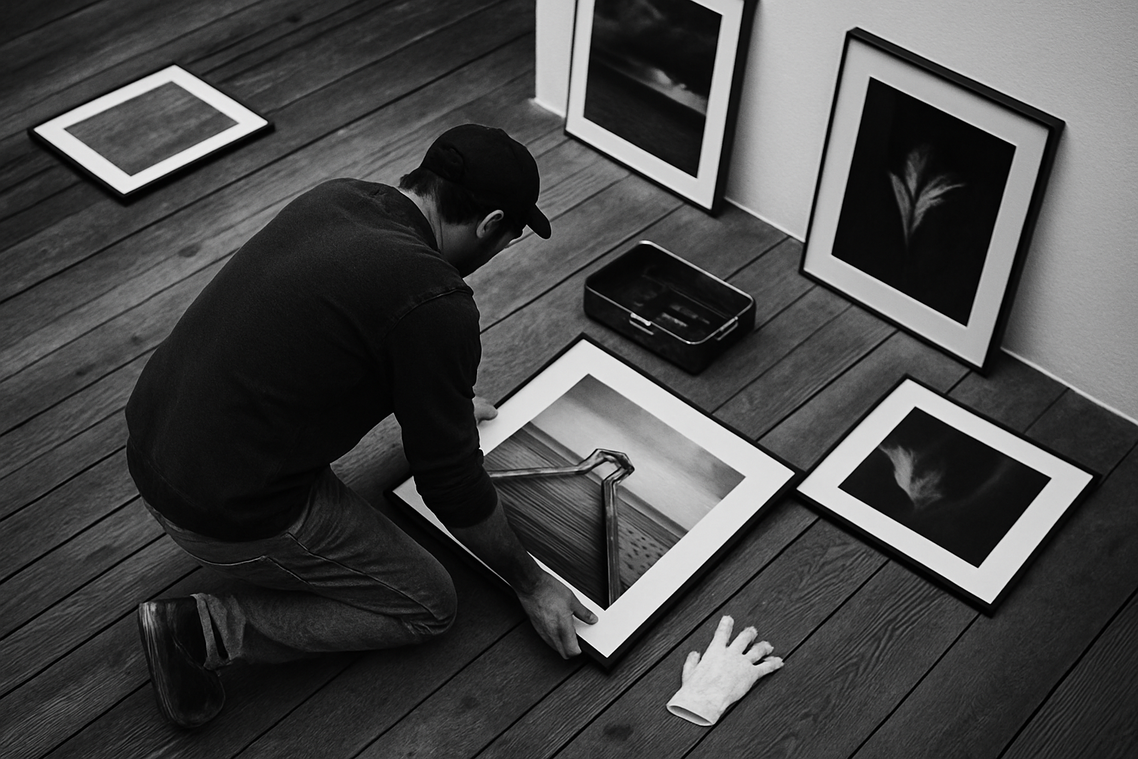
Why Hardware Matters
Walk into any serious gallery and you’ll notice something.
The paintings hang perfectly straight. They don’t tilt when someone walks by. They stay put.
That’s not luck. It’s hardware.
Most people grab whatever hanger came with their painting and call it a day. Usually that’s a sawtooth hanger, the little metal strip with teeth that grabs a single nail.
Here’s the problem with those.
They make leveling a nightmare. You adjust one side and the other side shifts. You try again. It shifts back. (I’ve spent way too many minutes doing this dance.)
Galleries use a two-point system instead. Two D-rings attached to the frame’s sides, connected with picture wire. The wire drapes over a single hook on the wall.
Why does this work better?
The weight distributes evenly across two points. The painting naturally finds its level. When you need to adjust, you just shift the wire slightly on the hook. I go into much more detail on this in Can Canvas Paintings Be Rolled Arcahexchibto.
Simple physics.
Now let’s talk about weight. A small watercolor needs different support than a large oil painting. Check the back of your piece for its weight, then match your hook to that number. When considering the weight of your artwork, it’s essential to also explore resources such as the Arcahexchibto Art Directory by Arcyart, which can provide valuable insights on how to properly support and display different types of pieces.
Your wall type matters too:
- Drywall needs anchors for anything over 10 pounds
- Plaster can be tricky but holds well with the right anchor
- Brick or concrete requires masonry anchors
I’ve seen expensive paintings hit the floor because someone used a hook rated for 5 pounds on a 15-pound piece. Don’t be that person.
Giving Artwork Breathing Room
You know can canvas paintings be rolled arcahexchibto for storage, but once they’re on your wall, they need space to exist.
Cramming paintings together makes each one harder to see. Your eye doesn’t know where to land.
Leave 4 to 6 inches between frames when you’re hanging multiple pieces. This gives each painting its own territory while keeping the group connected.
Think of it like personal space at a party. Too close feels awkward. Too far feels disconnected.
The same goes for furniture and corners.
A painting hung two inches above your couch gets lost. It becomes part of the furniture instead of standing on its own. Give it at least 6 to 8 inches of clearance.
Corners are tricky too. Hanging how do galleries hang paintings arcahexchibto shows they avoid tight corners completely. The wall space around the art is part of the presentation.
That empty space isn’t wasted. It directs your attention exactly where it should go.
Advanced Curation: Context, Lighting, and Sightlines
Most people hang art like they’re filling a blank spot on the wall.
Galleries do something different.
They think about how you’ll experience the piece before you even walk into the room. Where your eyes go first. How the light hits the canvas. What you notice when you’re standing ten feet away versus two feet away.
I want to show you how this works because once you understand it, you’ll never look at exhibition spaces the same way.
Considering the Space and Sightlines
Walk into any serious gallery and you’ll notice something right away.
The art isn’t just stuck on walls. It’s positioned to guide you through the space like a story.
Curators place powerful pieces on far walls to pull you forward. Your eye catches something compelling and you move toward it without thinking. That’s not an accident. That’s how do galleries hang paintings arcahexchibto and other professional spaces create what they call the viewer’s journey.
Here’s what you should do in your own space. Stand in your doorway and look at your walls. What catches your eye first? That’s your focal point. Put your strongest piece there.
The other thing galleries get right is architectural harmony. They don’t center art over furniture. They use the wall itself as the reference point. The geometry of the space matters more than what’s sitting below it.
Try this. Ignore your couch for a minute. Look at the wall as its own thing. Does your piece relate to the edges of the wall? To the ceiling height? That’s the relationship that matters.
The Critical Role of Lighting
Bad lighting kills good art.
I’ve seen incredible pieces look flat and lifeless because someone just used whatever ceiling light was already there. Meanwhile, galleries treat lighting like it’s half the installation.
They use adjustable track lighting with spotlights. Usually with a 30-degree beam spread that hits the canvas directly. This makes the art pop while the wall around it fades back. The contrast is what creates drama.
You don’t need a gallery budget to do this. Get a simple track light or even a picture light. Aim it at the canvas, not the wall around it.
But here’s the part most people miss.
Color temperature matters more than brightness. Galleries typically use lights in the 3000K to 3500K range. Why? Because it shows colors accurately. Go too cold and everything looks blue and clinical. Too warm and you get that yellow restaurant glow that distorts the actual hues. This connects directly to what I discuss in How to Submit Paintings to a Gallery Arcahexchibto.
Check your bulb packaging. If it says “soft white” or lists the Kelvin temperature, you’re on the right track. Aim for that 3000K to 3500K sweet spot.
One more thing. Test your lighting at night. That’s when you’ll really see if it works. If your art looks washed out or muddy under artificial light, adjust the angle or swap the bulb. When considering the best way to display your artwork in different lighting conditions, you might wonder, “Can Canvas Paintings Be Rolled Arcahexchibto,” especially if you’re looking to transport or store your pieces without compromising their quality.
The space and the light work together. Get both right and your art transforms from decoration into an actual experience.
Hanging Art with Intent and Precision
You came here to learn how galleries hang paintings. Now you know it’s more than just putting a nail in the wall.
The 57-inch rule gives you a starting point. But the real work is in the composition and how light hits each piece.
I’ve seen too many beautiful works lose their power because someone rushed the installation. The height was off by three inches or the lighting created a glare that pulled you out of the moment.
How do galleries hang paintings arcahexchibto comes down to one thing: removing distractions.
When you get it right, the artwork speaks directly to whoever’s standing in front of it. Nothing gets in the way of that conversation.
These aren’t just gallery secrets. You can use them in your own space.
Start with the 57-inch rule and adjust from there. Pay attention to your lighting (natural and artificial). Step back and look at the whole wall, not just individual pieces.
Your art deserves a presentation that matches its quality. Take the time to hang it with the same care that went into creating it.
The difference shows. Your space transforms and the work finally gets the respect it earned. Arcahexchibto Art Directory by Arcyart.
 Ask Norvain Veythorne how they got into art collecting tips and you'll probably get a longer answer than you expected. The short version: Norvain started doing it, got genuinely hooked, and at some point realized they had accumulated enough hard-won knowledge that it would be a waste not to share it. So they started writing.
What makes Norvain worth reading is that they skips the obvious stuff. Nobody needs another surface-level take on Art Collecting Tips, Art Market Trends, Artist Profiles and Interviews. What readers actually want is the nuance — the part that only becomes clear after you've made a few mistakes and figured out why. That's the territory Norvain operates in. The writing is direct, occasionally blunt, and always built around what's actually true rather than what sounds good in an article. They has little patience for filler, which means they's pieces tend to be denser with real information than the average post on the same subject.
Norvain doesn't write to impress anyone. They writes because they has things to say that they genuinely thinks people should hear. That motivation — basic as it sounds — produces something noticeably different from content written for clicks or word count. Readers pick up on it. The comments on Norvain's work tend to reflect that.
Ask Norvain Veythorne how they got into art collecting tips and you'll probably get a longer answer than you expected. The short version: Norvain started doing it, got genuinely hooked, and at some point realized they had accumulated enough hard-won knowledge that it would be a waste not to share it. So they started writing.
What makes Norvain worth reading is that they skips the obvious stuff. Nobody needs another surface-level take on Art Collecting Tips, Art Market Trends, Artist Profiles and Interviews. What readers actually want is the nuance — the part that only becomes clear after you've made a few mistakes and figured out why. That's the territory Norvain operates in. The writing is direct, occasionally blunt, and always built around what's actually true rather than what sounds good in an article. They has little patience for filler, which means they's pieces tend to be denser with real information than the average post on the same subject.
Norvain doesn't write to impress anyone. They writes because they has things to say that they genuinely thinks people should hear. That motivation — basic as it sounds — produces something noticeably different from content written for clicks or word count. Readers pick up on it. The comments on Norvain's work tend to reflect that.