
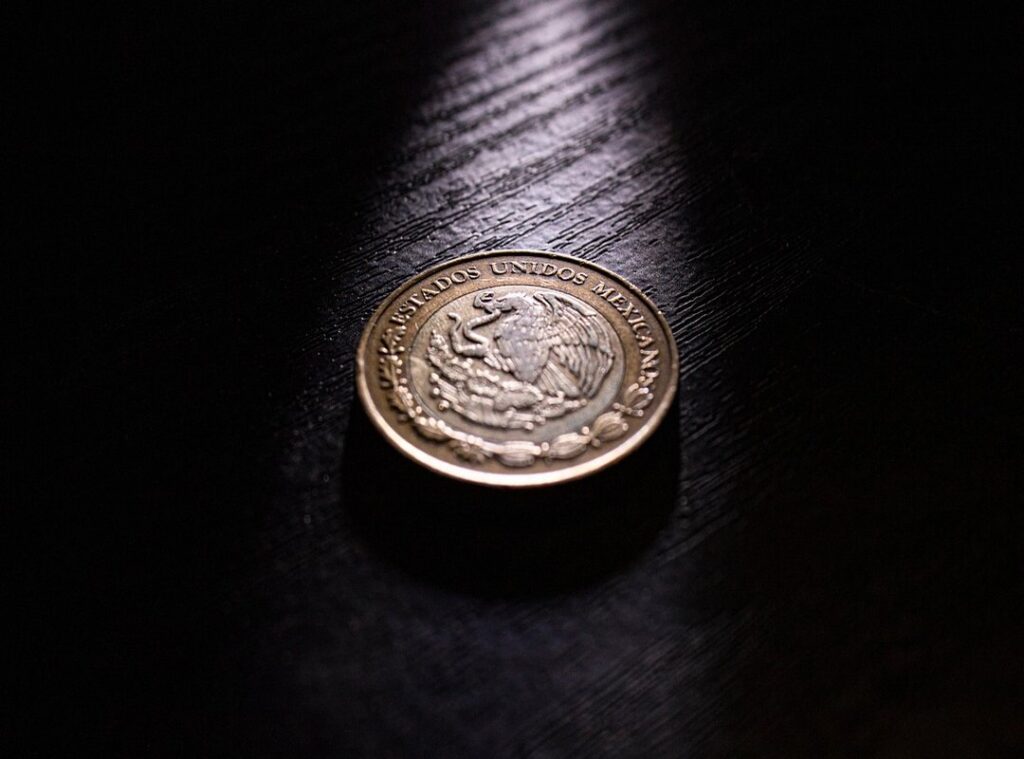
You’ve got 25,000 Mexican Pesos (MXN) and you’re wondering how much that is in Chilean Pesos (CLP). As of October 2023, 25,000 MXN is worth approximately 1,250,000 CLP.
Exchange rates change all the time, so it’s good to know how to find the live rate. I’ll show you how to do that.
But wait, why stop there? You also need to know the best ways to exchange your money. Whether you’re traveling, sending funds, or making online purchases, you want to avoid those high fees.
Understanding the process is key to getting the most value for your 25.000 pesos mexicanos a chilenos. Let’s dive in.
What is 25,000 MXN Worth in CLP Today?
To find out what 25,000 MXN is worth in CLP, you need to know the current exchange rate. As of today, 1 MXN = X.XX CLP.
So, 25,000 MXN multiplied by X.XX gives you the amount in CLP.
The mid-market rate is the ‘real’ exchange rate that banks and transfer services use. It’s the one you see on platforms like Google or XE.com. This rate is the most accurate and fair.
On the other hand, the tourist rate or buy rate includes a profit margin for the exchange service. This means you get less CLP for your MXN compared to the mid-market rate.
Let’s break it down with a simple table:
| Conversion Type | Rate (MXN to CLP) | Final Amount (CLP) |
|---|---|---|
| Mid-Market Rate | X.XX | Y.YY |
| Typical Bank Rate | Z.ZZ | W.WW |
Using the mid-market rate, you get more CLP for your 25,000 MXN. Banks and exchange services often give you a lower rate, which means less money in your pocket.
For checking the live, up-to-the-minute rate, I recommend using free online currency converters like Google Finance, XE, or OANDA. These tools are reliable and easy to use.
When converting 25.000 pesos mexicanos a chilenos, always check the mid-market rate to get the best deal.
Why the Mexican to Chilean Peso Exchange Rate Fluctuates
Currency values aren’t set in stone. They change every day based on supply and demand in the global market.
Economic health is a big factor. Things like interest rates, inflation, and job growth in both Mexico and Chile can make their currencies stronger or weaker.
Commodity prices play a role too. Chile’s economy relies heavily on copper, and Mexico’s on oil. When these prices go up or down, it affects their currencies.
Political stability and investor confidence matter as well. Big political events or uncertainty can make international investors move their money around, which impacts exchange rates. Think of currency values like stock prices.
They rise and fall based on how well the country is doing and what people think will happen in the future. 25.000 pesos mexicanos a chilenos
If you’re looking to convert 25.000 pesos mexicanos a chilenos, these factors will determine how much you get. Understanding them can help you make better decisions about when to exchange your money.
How to Exchange Your Pesos: Best and Worst Methods
When it comes to converting your pesos, some methods are way better than others. Let’s break it down.
Method 1 (Best for sending money): Online Money Transfer Services. These platforms, like Wise and Remitly, offer low fees and exchange rates close to the mid-market rate. It’s a no-brainer if you’re looking to send money abroad.
Method 2 (Best for travel): No-foreign-transaction-fee credit or debit cards. This is super convenient and often gives you excellent rates directly from the payment network. Perfect for when you’re on the go.
Method 3 (Okay but costly): Traditional Banks or Credit Unions. Sure, it’s secure, but you’ll likely face less favorable exchange rates and higher transfer fees. Not the best choice if you’re trying to save money.
Method 4 (Worst option): Airport Currency Exchange Kiosks or Hotel Desks. Stay away from these. They have notoriously poor rates and hidden fees that take advantage of your need for convenience.
Always look at the final amount you will receive in CLP, not just the advertised exchange rate, as fees can be hidden.
If you’re planning to convert 25.000 pesos mexicanos a chilenos, make sure to use one of the top two methods. Trust me, it’ll save you a lot of hassle and money.
Common Questions About Converting Mexican and Chilean Pesos
Q1: What are the currency codes I should know?
A: MXN for the Mexican Peso and CLP for the Chilean Peso. Simple, right?
Q2: Can I use Mexican Pesos in Chile?
A: No. You must convert your money to the local currency, CLP, for all transactions.
Q3: Is it better to exchange money before I travel or when I arrive in Chile?
A: Exchange a small amount beforehand for immediate needs. Then, use an ATM in Chile with a good debit card for better rates on larger sums.
Q4: How can I avoid high ATM fees abroad?
A: Use debit cards from banks that are part of global alliances or that reimburse foreign ATM fees. It saves you a lot of hassle and cash.
Pro tip: Always check the current exchange rate. For example, 25.000 pesos mexicanos a chilenos can vary, so it’s smart to stay updated.
Making Your 25,000 Pesos Go Further
The key to a good conversion is not just knowing the rate, but choosing the right method to minimize fees. Consider using online transfer services for sending money or fee-free cards for travel. These options can help you save significantly on transaction costs.
Always check the live mid-market rate on a reliable converter before you commit to an exchange service. 25.000 pesos mexicanos a chilenos can go much further with these smart choices. Use this knowledge to make smarter decisions and save money on any future currency conversions.
 Jessica Elsassie has opinions about inspiration and ideas for artists. Informed ones, backed by real experience — but opinions nonetheless, and they doesn't try to disguise them as neutral observation. They thinks a lot of what gets written about Inspiration and Ideas for Artists, Art Collecting Tips, Artist Profiles and Interviews is either too cautious to be useful or too confident to be credible, and they's work tends to sit deliberately in the space between those two failure modes.
Reading Jessica's pieces, you get the sense of someone who has thought about this stuff seriously and arrived at actual conclusions — not just collected a range of perspectives and declined to pick one. That can be uncomfortable when they lands on something you disagree with. It's also why the writing is worth engaging with. Jessica isn't interested in telling people what they want to hear. They is interested in telling them what they actually thinks, with enough reasoning behind it that you can push back if you want to. That kind of intellectual honesty is rarer than it should be.
What Jessica is best at is the moment when a familiar topic reveals something unexpected — when the conventional wisdom turns out to be slightly off, or when a small shift in framing changes everything. They finds those moments consistently, which is why they's work tends to generate real discussion rather than just passive agreement.
Jessica Elsassie has opinions about inspiration and ideas for artists. Informed ones, backed by real experience — but opinions nonetheless, and they doesn't try to disguise them as neutral observation. They thinks a lot of what gets written about Inspiration and Ideas for Artists, Art Collecting Tips, Artist Profiles and Interviews is either too cautious to be useful or too confident to be credible, and they's work tends to sit deliberately in the space between those two failure modes.
Reading Jessica's pieces, you get the sense of someone who has thought about this stuff seriously and arrived at actual conclusions — not just collected a range of perspectives and declined to pick one. That can be uncomfortable when they lands on something you disagree with. It's also why the writing is worth engaging with. Jessica isn't interested in telling people what they want to hear. They is interested in telling them what they actually thinks, with enough reasoning behind it that you can push back if you want to. That kind of intellectual honesty is rarer than it should be.
What Jessica is best at is the moment when a familiar topic reveals something unexpected — when the conventional wisdom turns out to be slightly off, or when a small shift in framing changes everything. They finds those moments consistently, which is why they's work tends to generate real discussion rather than just passive agreement.